Category Archives: Things to try

Things that photographers can try out and enjoy.

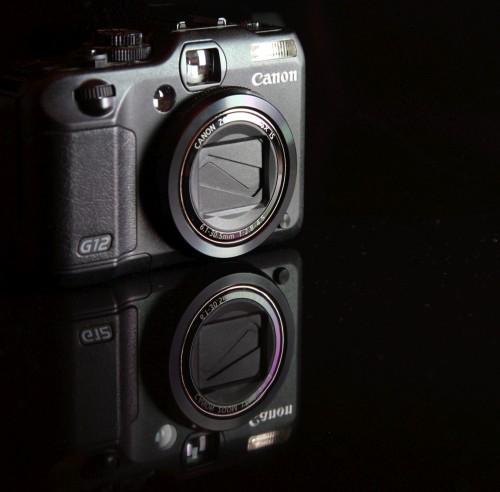
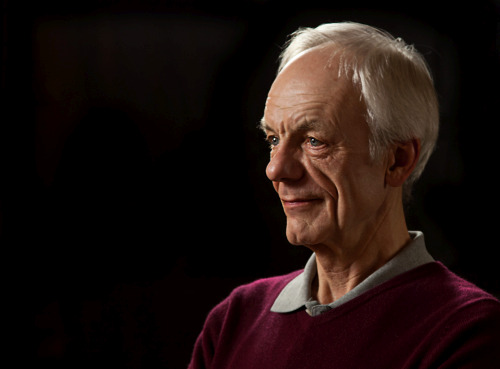
The secret to a wonderful black background with moody lighting

Mastering the black background

• Mastering the black background •
With very little practice you can get a perfect black background and moody lighting.

The eye is captured by solid black.

It provides a really focussed experience for the viewer. Low key and solid black backgrounds provide a wonderful insight on detail and features. If you get this right it provides an excellent insight for portraits and helps many other aspects of your photography. This is a technique I use for product photos, still life, landscapes and flower photography.

Simplicity itself

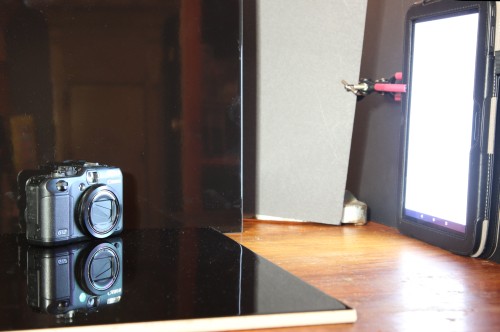
The technique involves using a bright light (off camera flash) to overpower the ambient light. The steps are simple…

  • Set your camera to its lowest ISO setting (around ISO 100) – the sensor is least sensitive to light.
  • Set your aperture to a high f number (small aperture = low light), say f11, or higher so that the amount of light your camera lets in is very small.
  • Take a test shot to ensure your screen is black – you want nothing to show.
  • Shoot with a diffused off-camera flash at full power using a narrow beam.

This simple technique is relying on extreme underexposure. Basically you are underexposing the whole scene to blackness. But then you are introducing a very narrow beam of brightness that overcomes a limited area of the underexposed shot. This leaves your highlighted spot on the subject in a moody light with the rest in black.

Photography Technique: The Invisible Black Background

Glyn Dewis  External link - opens new tab/page introduces the technique on video. Notice the way the umbrella is creating a focussed narrow beam of light. You can do the same thing with “barn door” lights or cards either side of a reflected flash. Enjoy the video…


By Damon Guy (author and editor)

Netkonnexion

Damon Guy (Netkonnexion)

Damon is managing editor of Photokonnexion.com with professional experience in photography, writing, image libraries, and computing. He is also an experienced, webmaster and a trained teacher. Damon runs regular training for digital photographers who are just starting out.
See also: Editors ‘Bio’
By Damon Guy :: Profile on Google+

Three great ideas to make group shots more compelling

Bloomingdale beach girls put their heads together by JeromesPOV, on Flickr

Bloomingdale beach girls put their heads together
Click image to view large
Bloomingdale beach girls put their heads together by JeromesPOV, on Flickr External link - opens new tab/page

Group shots are about togetherness.

The most important thing in any picture is to connect subject and viewer. Some pictures are more compelling than others. Here are three powerful eye pulling ideas for groups.

Cohesion

One of the more compelling group compositions is to introduce cohesion. A happy group of friends has more cohesion than say, a bunch of people on a street corner waiting to cross the road. Something in a friend-group holds them together. There are lots of ways you can build in cohesion to a shot. One method I use is to get the group to put their heads together. Somehow when people go out of the way to touch heads, or to bring their heads close, there is a lot of intimacy shown. That cohesion is very powerful.

Another form of cohesion is arms around each other. More intimate is for the group to be leaning in the same direction in some way. That imparts a powerful togetherness to the group. Another idea is to pose arms in a similar way or a similar direction. You can do the same with legs too.

Commonality

Groups can hang together really well without being personally intimate. A common theme in the group can give everyone a dynamic togetherness. Sometimes a colour is a good theme. If I am doing family portraits it is important to capture the faces. Any distraction takes away the family feel. I urge my family group to have similar colours and clothes. That helps prevent distraction from the faces and gives a sense of togetherness – all wearing jeans and a blue tee-shirt for example.

If you think creatively there are lots of ways to achieve the same thing. Poses of all sorts can help too. When you are all doing the same thing it pulls the group together. The pose does not have to be intimate.

Saudi Graduates by Ben SJ, on Flickr

• Saudi Graduates •
Doing something in common like the pose here, or wearing similar clothes helps the group to have a common theme.
Click image to view large
Saudi Graduates by Ben SJ, on FlickrExternal link - opens new tab/page

Framing

One of the strong compositional elements in portraiture is framing. If you can find a frame that constrains the group in a small place it helps them to look more cohesive – especially if the frame pushes them close together. One of the best examples of this is in wedding photography. Close members of the family pictured between tight columns outside a church is a good way to pull the group together. The columns prevent the eye from straying out sideways and the family in the middle hold the eye as a result.

More after this…

find out more...Photokonnexion tips by email
Enjoying this article? Please sign up for our
Tips by email service.
                                                Find out more

Group intimacy with effective framing can be shot among trees or other landscape features. There are plenty of ways to fit people between features. As long as the framing feature is not too strong the group will gain from the close proximity and still be the centre of interest. Using landscape features is great for impromptu family portraits on holiday.

A more traditional form of framing is the use of the vignette. You put the vignette in in post production. The use of shadow or white-out techniques at the edge of the picture and particularly the corners, helps focus the eye gently to the centre of the picture.

Fishermen ... and friends!

• Fishermen … and friends! •
Small group portrait shot in Green Harbour, Massachussets
This shot pulls it all together. Close head intimacy (right hand three). Togetherness pose (arm positions, smiles/expressions). Commonality in colour/clothes. Common theme – fishing. Framing – the boat roof stops the eye straying upward.
Click image to view large
Fishermen … and friends! Small group portrait shot in Green Harbour, Massachusetts by Nicola Zingarelli, on Flickr External link - opens new tab/page

Getting it all together

There are lots of ways to help make your group hang together. If you can add cohesion, commonality and framing to your group shots you will be well on the way to a compelling shot.


By Damon Guy (author and editor)

Netkonnexion

Damon Guy (Netkonnexion)

Damon is managing editor of Photokonnexion.com with professional experience in photography, writing, image libraries, and computing. He is also an experienced, webmaster and a trained teacher. Damon runs regular training for digital photographers who are just starting out.
See also: Editors ‘Bio’
By Damon Guy :: Profile on Google+

UK Photographers image ownership rights threatened by new legislation

Copyright legislation may allow legalised theft of your images

Copyright legislation may allow legalised theft of your images


UK Government lets down photographers.

In an unprecedented move a recent piece of UK legislation threatens photographers’ ownership of their own image. The Act potentially legalises online theft of images from amateur and professional alike. The legislation, which gained Royal Assent on the 25th of April 2013, will enable “orphan works” to be claimed on the basis of a copyright search. The person claiming the image will be able to re-licence it and claim full compensation for its use or resale if the copyright owner is not found.

Enterprise and Regulatory Reform Act

The new Act, which comes into force early 2014, is a “framework” Act addressing various legislative issues. The copyright section of the Act provides the power for the Government to introduce licensing of orphan works. The Act leaves detail to be inserted later through secondary legislation. Photographers are angered that this small section of the Act has allowed this rights-changing Act to be sneaked in under the radar.

The new licensing powers will be an important re-mapping of UK copyright law. The existing emphasis on assumed copyright ownership will be shifted toward the users of copyrighted works. This represents a change of copyright ownership from a “property right” under author control to a new condition where copyright becomes a licensing/sales tool with the owner having less control over end use.

The detail of this shift in emphasis is yet to be determined. The secondary legislation will define a “diligent search” which will be needed to find the originator/copyright owner. Also to be clarified is how orphan works will be re-registered to new owners; to what extent images will be under the control of new copyright owners and how the transfer of copyright might occur.

One concern is how the process of monitoring, transferring and re-licensing orphaned images would be administered and the sort of organisation to do the work. This also raises other spectres…

  • Will works need to be registered to avoid them becoming orphaned?
  • What sort of costs are going to be involved?
  • Will artists and photographers working alone be able to register or bear the cost?
  • To what extent will amateurs be protected?

There are many more questions that need answers too.

Photographers concerns…

Last year a backlash occurred against the photography social networking site Instagram. The site implemented terms and conditions potentially passing usage rights to Instagram. In the end Instagram backed down in the light of public and user anger. Many people have seen a similar rights grabbing move in this new UK Act.

The cost of litigation against copyright abusers is prohibitive. Small photography businesses and amateurs do not have resources to fight expensive court battles. So corporations rip people off and smaller organisations hide in the tide of online images.

Photographers are worried that tide will make this legislation a free-for-all thieves charter. The concern is that anyone could claim “diligence” when searching for a copyright holder by simply doing a Google search. No immediately obvious copyright owner being found would enable them to apply for a licence to take over the copyright.

This legislation seems likely to create a new market for third party organisations to move in and manipulate the ownership of creative works. That represents a money-making bonanza for big business interests in the creative industries. It will also be a total disaster for the little guy trying to protect their life’s work and income. Amateur interests in particular are likely to be badly hit. Great images will be ripped off because amateurs will not be in a position of knowledge or resources to protect themselves.

The social media area is a particular concern. There are very real fears that the volume of images online are so huge that carrying out effective copyright searches in social media websites will not identify most image creators. This will make copyright takeovers the norm, rather than the exception, a position reinforced by weak protection for image creators.

What every UK photographer can do

This new Act is the start of a long road where the nature of copyright in the UK could change for the worse. At the moment the new landscape is shrouded in fog. However, the fact that this Act has been implemented in this way, under the radar, does not suggest a great outcome.

On the HM Government website a petition has been posted that tackles the issue. Help us raise awareness by signing the petition and telling your friends about it too. The more photographers who understand the issues the more likely we will be to ensure we have a voice in future secondary legislation on this issue. Visit this UK Government petition at:

Stop Legalised Theft of Copyrighted Works  External link - opens new tab/page

Please sign the petition and keep your eyes open for more information in the coming months.


By Damon Guy (author and editor)

Netkonnexion

Damon Guy (Netkonnexion)

Damon is managing editor of Photokonnexion.com with professional experience in photography, writing, image libraries, and computing. He is also an experienced, webmaster and a trained teacher. Damon runs regular training for digital photographers who are just starting out.
See also: Editors ‘Bio’
By Damon Guy :: Profile on Google+

find out more...Photokonnexion tips by email
If you enjoyed this article please sign up for our
daily email service.
                                                 Find out more

The simple secrets behind good food photography

Food for Her World Vietnam magazine.

Food for Her World Vietnam magazine.
Food styling by Dang Phuong
Photography by Mads
Food for Her World Vietnam magazine. Photography by Mads • on FlickrExternal link - opens new tab/page


We all love good looking food…

So what is it that makes great food photography? I love to cook and make tasty food. But great cooks also have a skill with presentation. It is the presentation which really makes great food shots too.

Food photography seems to be centred on three things – good looking food composition; great light and picking the right focus/centre of interest. Duh! Wait a minute, isn’t that pretty much photography summed up all over? OK, I jest. Good food photography does seem to require a particular approach.

Here are some of my observations on food shots. You should look to achieve…

  • Understanding and practice with small-sized and table-top compositions.
  • A working knowledge of lighting at the table-top scale.
  • Simple natural light from one source (window).
  • Able to use reflectors/black cards to shape the light.
  • Simple centre of interest in the shot.
  • Carefully chosen depth of field.

And with the food itself…

  • Natural and where possible bright colours.
  • The colour mix should work together.
  • Avoid odd clashes of colour.
  • The food combinations should be simple and few.
  • Focus on the main interest.
  • Use bokeh sparingly.
  • Avoid highlight bokeh spots where possible.
  • Try to emphasis the texture of the food.
  • Use simple but eye catching cutlery and plates.
  • Avoid cluttering the shot with too much food.

More after this…

Book recommendation:

Food Photography:
From Snapshots to Great Shots

Simple advice on lighting including great diagrams. The pictures include camera settings. Excellent advice on setting up a table-top studio which was also inexpensive to do. Lots of tricks and techniques like the pros use. Great presentation ideas.

Food Photography Tips – Video

In this video we look a range of ways to look at and shoot food. It is a great introduction to the basics and covers a wide range of important points.


By Damon Guy (author and editor)

Netkonnexion

Damon Guy (Netkonnexion)

Damon is managing editor of Photokonnexion.com with professional experience in photography, writing, image libraries, and computing. He is also an experienced, webmaster and a trained teacher. Damon runs regular training for digital photographers who are just starting out.
See also: Editors ‘Bio’
By Damon Guy :: Profile on Google+


Can you write? Of course you can!
Write for Photokonnexion...

We would love to have your articles or tips posted on our site.
Find out more…
Write for Photokonnexion.

The secret to world travel – but staying at home!

• Winchester Cathedral •

• Winchester Cathedral •
Chroma key work is quite easily done in Adobe PhotoShop and a range of other quality photo-editors.

When you want to be somewhere else…

There are places we would rather be than where we are now. I would like to be on an island paradise …not going to happen! But you can do it photographically. The secret is something called Chroma Key photography or green screening.

Substitution

In chroma key photography the subject is photographed against a uniformly lit green background. Then, in post production the subject is easily selected out from the green background. The selection can then be pasted into any other photographic background.

Any uniform colour can be used as a backdrop for the chroma key shot. The picture above is selected from a blue background and pasted into a picture of Winchester Cathedral in SE England. The two pictures were taken on different days.

To make the selection of the subject from the background it is important to light the background evenly. When the colour is even the selection is easy and can be completed in one operation. Colour variations from uneven light make it more technical to isolate the subject.

Green is the most frequently used colour in chroma key photography. The colour is very easily separated from human skin tones. Where the subject has green tones, blue is often used as the chroma key alternative. Blue is a common colour for clothing. It is therefore less suitable than a strong bright green which is not so popular as a fashion colour. However, green does have other advantages. The human eye is able to see more shades of green than any other colour. This makes it easy to see variations in the green when setting up the lighting. Green sensitivity is also built into software applications to match the abilities of the eye. This helps us to work with the background when doing awkward selections.

Fun and games

The substitution of a subject into any other photographic background provides great opportunities for doing fun things. Film stars can be placed in your garden. You can apparently travel the world without leaving your front room. Just find the right pictures and substitute yourself into the background of your choice.

Of course there are also opportunities for advertising, graphic art, product photography, still life, portraiture, action shots and many other false situations. Of course we should be careful not to be immoral about such things! Feel free to have fun though. You can really make it look like you have travelled the world.

How is it done?

Basically you need a chroma key background, lighting to illuminate it evenly, a camera and a subject. On a small scale this is easy to do. A lot of people doing chroma key work for the first time start with still life or table-top photography to get the technique right. Probably the most common use of the technique is for portraiture. Take a picture of yourself or your friends and then start playing. For this you need a larger screen…

The video is a complete introduction to the use of chroma key photography. You can take the same techniques and scale them to any size. The video introduces the ideas you need to grasp and shows how to set up the lights and the equipment. It also shows one of the software applications. After the video I will briefly look at that software for you.

How to Green Screen (ChromaKey) with Photography!

markapsolon  External link - opens new tab/page

Software

There is a whole range of software that is capable of doing chroma key. In essence chroma key software has two jobs. The first is to select the subject off the green background (or whichever colour you are using). The second is to successfully blend the abstracted subject with the new background.

The software from the video is called PhotoKey from FXHome  External link - opens new tab/page. It has been produced specifically for chroma key compositing. It is not alone in the market. However, there are not many applications specifically aimed at this work. Instead there are plenty of applications that do chroma key blending as part of a general suite of editing tools.

The website advertises a “try for free” download system. I did download the editor and install it on my computer. However, the try out does not produce a viable picture. The watermarking is so heavy the try out is really just to have a go at using the tools. So don’t expect to get something for free in reality. Here is the same picture from the top of the page done in Photokey…

• Winchester Cathedral •

• Winchester Cathedral •
Produced in PhotoKey from FXHome. The watermark is put onto the image when you use the trial download version of the application for free.

As you can see the result is similar to my Photoshop version at the top of the page – except for the heavy watermarking ruining the picture.

The actual process for producing the final blended image is relatively quick and easy. The tools are quite self explanatory if you have some editing experience. On the right are the main steps of the process arranged in order of use. Starting at the top you can created a final blend of the two images by clicking on each step in turn and working your way down. As you select a step the tools for the import, selection, blending and finishing of the image become available. As with any editor the blending tools manage colours, contrasts, edging and so on. The order of work is simple and the use of tools quite easy. Most tools are simple sliders. I did like the reset button on each which allowed you go back to the default for that tool if you made a mistake.

At the end of working through the blending process you final image is on screen. You can make further changes to it if you wish. If you are satisfied with it you can export it to make a .png, .jpg or .tiff image. If you are not satisfied with the final output you can go back to the blend left in the editor and do further work.

I liked the application interface. It was simple and easy to use. However, it had some tools that were a little difficult to understand. I think those would become clear with practice. This is not an application you can use immediately – it requires practice.

On balance I liked the application. However, for a beginner in chroma key work it is hugely expensive. At £119 (around $180 US) for the basic version it seems prohibitive. I think I would rather spend that amount of money on a full blown editor like Adobe Elements which could do the same work, and a lot more, for substantially under £100. An editor like GIMP  External link - opens new tab/page could also do the same work and a lot more and it is free.

The one benefit that makes it worth investing in this application is the simple and fast processing. If you have a lot of chroma key work the use of this software would save a lot of processing time. If you happen to be doing a lot of it professionally then it would be worth investing in the Pro version at £229 (at time of writing).

While I was not impressed with the basic price, the application was useful and could fill a niche in the market. However, it is not worth it for the beginner. Instead, it would be better to invest in a decent image-editor and broaden the work you do overall. However, if you are specialising then it may be worth considering providing you return income to cover your investment.

The way to do it in Adobe PhotoShop

The general photographer is most likely to have use of a quality image editor like PhotoShop, Elements, GIMP, PaintShopPro and others. All these are able to do the type of work that PhotoKey can do. Admittedly it takes longer. But for beginners it is better to save your money for more general photography kit. For those who are interested, here is a short video explaining the Photoshop method of doing a chroma key composite. It is a simple technique using standard photoshop tools.

Isolating with a Chroma Key Background

This tutorial is aimed at Photoshop intermediate level users.

Overall…

Chroma key work is fun. There is quite a lot to learn, but it adds flexibility to your photographic work and post processing. The use of up to date quality image editors is probably better than splashing out on expensive specialist applications. Nevertheless specialist applications do a great job, saving time in post processing.


Can you write? Of course you can!
Write for Photokonnexion...

We would love to have your articles or tips posted on our site.
Find out more…
Write for Photokonnexion.

find out more...Photokonnexion tips by email
If you enjoyed this article please sign up for our
daily email service.
                                                 Find out more

The secrets of good backgrounds

• Backdrops •

• Backdrops •
Wallpaper can be used extensively as a backdrop. There is plenty of variation and the material is relatively cheap.

Get more out of less.

One of the central ideas behind photography is to reduce the “clutter” especially in the background. We want to simplify our shots to help focus the viewers attention on the subject we have chosen. Often, by way of controlling the scene we use backdrops. For the modern photographer a backdrop provides a simple uncluttered background that can be used to off-set the colours of the subject, or to complement them or remain neutral.

Backdrop secrets

Modern backdrops have a wide range of finishes. However, strong patterns and fussy details draw the eye off the subject. So most backdrop patterns are designed to reduce the impact on the eye. Rather than regular strong lines or shapes these back drops will tend to have random and subdued variations in the theme. Other backdrop types are solid colours. The best backdrops are minimalist.

Black backdrops are often used for darkening and absorbing the light. White backgrounds are frequently used for high-key photography. Reds, purples and blues are often used for different types of shots, but can also form effective variations for monochrome work (single tone shots or a single colour and white).

Bright green backdrops are called chroma-key (chromakey). They are often used to provide a set colour ready for post processing technique called compositing. This is where new colours or entire images are to swapped into the image. The subject is retained but the green colour is replaced with an entirely new image. This technique is the digital replacement of the old ‘back-projection’ or painted backgrounds techniques used to make it look like there was something solid in the background in the days of film. Actually there was a blank screen behind the subject. This technique is also known as “green screen”.

Backdrops can be used anywhere but are used extensively in two particular branches of photography. Portraiture and fashion photography use backdrops to simplify the scene as much as possible. This allows the person or model to be the strongest element in the scene. The eye is therefore drawn to the person which is where the photographer wants people to look. A fashion or portrait shot where the eye is not on the person is a disaster!

Still life

The other area where backdrops are used extensively is in various types of still life. Again the intention is to create a simple scene so the subject is the centre of interest. However, in still life the relatively close up nature of the work can allows the use of stronger elements in the backdrop.

Heart in hand

Heart in hand • By Damon Guy
In smaller scenes or still life backdrops can be stronger. The diagonal wallpaper pattern here helps the flow of the eye.


In the picture above the hands are the centre of attention. The backdrop is used in this case to provide a dynamic feel (from the strong diagonal) and to direct the eye along the line of the phrase in the heart. Eyes naturally tend to follow lines like that.

Wallpaper

While solid colours and simple patterns are well catered for in the market, specific patterns on backdrops are limited. However, in the picture at the top of this page you can see that I have arranged a variety of different wallpaper samples. Wallpaper is easy to find – it is in every DIY store and great patterns, plain or textured can be found at relatively cheap prices. If you are working at small, still life, sizes one piece of wall paper might be sufficient. However, I have sometimes worked with wallpaper on a full sized portrait backdrop. In this case I use strong tape to stick the wallpaper sheets side by side to make the backdrop wide enough. Then, I staple the wall paper to two light wooden battens, top and bottom. This helps hold the papers together with less damage. It also helps pull the paper out so it hangs flat. Wallpaper has a tendency to curl. Then the top batten is clamped to the backdrop cross bar. Hey presto! You have a cheap but patterned backdrop.

Other patterns, shapes and marks can be used to do other things in a picture. In fact if it is used properly the use of backdrops can be complementary, can be contrasting, can form effective reflections, light dampening, and many more things. Understanding backdrops is a great way to ensure that you can control what is going on behind the main subject.

Decor

Backdrops have rich history in the theatre. Today, in modern still photography they are relatively simple and uncluttered. However, if you have a specific scene in mind you can use wall paper to provide fun and varied backdrops to complement or change your scene. While proper cloth or paper backdrops can be quite expensive; wallpaper is a relatively cheap way to use fun patterns and interesting backdrops.


By Damon Guy (author and editor)

Netkonnexion

Damon Guy (Netkonnexion)

Damon is managing editor of Photokonnexion.com with professional experience in photography, writing, image libraries, and computing. He is also an experienced, webmaster and a trained teacher. Damon runs regular training for digital photographers who are just starting out.
See also: Editors ‘Bio’
By Damon Guy :: Profile on Google+

find out more...Photokonnexion tips by email
If you enjoyed this article please sign up for our
daily email service.
                                                 Find out more

Inexpensive Close-Up Photography – Tips and Tricks

• Oil and water •

• Oil and water •
These bubbles of oil in water were shot with a
Canon 50 mm f/1.8 and a +10 close-up filter.Click image to view large
Oil and water • by ArchaeoFrog on FlickrExternal link - opens new tab/page

Easy, budget macro.

Macro or close-up photography is accessible without investing in a pricey macro lens. The first three articles in this series covered techniques for inexpensive macro-level results: close-up lenses, reverse rings, and extension tubes. In this article, I offer suggestions for achieving great-looking results using any of these three techniques.

Choose Your Depth of Field

Depth of field is a term that refers to the area of the image that is acceptably sharp and in focus. Depth of field is a function of many things. Our interest is in three factors. These are aperture, the distance between the camera and the subject, and the orientation of the subject relative to the camera.

Aperture has a direct influence on the depth of field. A wide aperture (smaller f number, such as f/1.8) creates a shallow depth of field. Areas of the image outside of the zone of sharpness fall out of focus quickly. Wide apertures can be used to create bokeh – unsharp sections of the image.

A narrow aperture (larger f number, such as f/22) creates a deep depth of field. The majority of the image is in focus. Narrow apertures are often used by landscape photographers to capture front-to-back sharpness throughout an image.

The distance between the camera and the subject also influences the depth of field. Generally, the closer that you are to your subject, the narrower the depth of the field becomes. This is particularly important when using macro and close-up photography techniques where you need to be physically close to the photographic subject.

• Bokeh penny •

• Bokeh penny •
Penny shot with a Canon 50 mm f/1.8 lens and a full set of three, generic extension tubes (7, 14, and 28 mm). The plane of sharpness lies parallel to the flat of the lens. If the plane is not parallel the focus is quickly lost.
Click image to view large
Bokeh penny • By ArchaeoFrog on Flickr External link - opens new tab/page

It is also important to consider the orientation of the subject relative to the camera. The depth of field can be thought of as a plane that is parallel to the camera lens. If you can orient yourself so that the subject is parallel to the flat of camera lens, more of your subject will be in focus than if it is at an angle to the camera. In the penny shot above, I tilted the camera lens slightly away from the parallel position. The loss of focus from right to left is obvious.

• Flowers and Depth of Focus •

• Flowers and Depth of Focus •
Click image to view large
• Flowers and Depth of Focus • External link - opens new tab/page

The flower photographs show how depth of field influences an image. Both were taken with the same lens (Canon 50 mm f/1.8), the same aperture (f/1.8), and the same technique (reverse ring). Both images have a shallow depth of field (wide aperture) and are close to the subject. The appearance of the depth of field is very different. The yellow flower (left) is sideways to the camera. Only the closest edges of the petals are within the depth of field and are in focus. The purple flowers center is shot parallel to the camera. The entire center of the flower is within the depth of field and appears in focus.

If you want more of your subject in focus use a narrower aperture. Increase the distance between yourself and the subject, and set the camera (and thus the depth of field) parallel to the subject. If you want less of your subject in focus, you can use a shallow aperture, get in closer to your subject, and orient the camera and depth of field perpendicular to the subject. Try it many different ways and see what works best for what you envision!

The Tripod: With and Without

It is possible to achieve acceptably sharp macro results hand-holding the camera. The majority of images in these articles were shot hand-held. If you have a stationary subject using a tripod will greatly improve the sharpness of your image. A tripod allows you to use longer shutter speeds. This helps you get crisper images in lower light. It also allows a narrower aperture to gain a deeper depth of field. The steadiness of the tripod will significantly reduce hand movement.

If available, also use the Live-View function on your camera to fine-tune your focus. Live-View lets you use your display screen rather than the viewfinder. Many cameras allow you to zoom in on a portion of the image to check the focus.

Without a tripod a good stance improves stability while hand-holding. Create your own tripod with your body by bracing yourself or your camera. In the diptych image below, I am using my elbows for support. The elbows in combination with my feet create a similar a three-point stability like a tripod. In the extension tube article, I demonstrated a similar human-tripod by bracing my elbows on my knees while shooting.

• Simultaneous diptych •

• Simultaneous diptych •
These two images were taken at the same time and show my hand-holding position as well as the image captured. The flower was shot with a reverse-mounted Canon 50 mm f/1.8 lens.Click image to view large
• Simultaneous diptych • by ArchaeoFrog on Flickr External link - opens new tab/page

This three-point position allows me to lean in and out very slightly with the camera. I can manually find the exact focus that I want in the photograph. Focusing with body movement allows me to place the depth of focus exactly where I want it relative to the subject.

More after this…

find out more...Photokonnexion tips by email
Enjoying this article? Please sign up for our
daily email service.
                                                Find out more

When you are hand-holding practice breathing slowly and pushing the camera shutter button gently, without imparting additional motion to the camera. (More tips on stance)

Play, Combine, and Find What Works for You

You can use extension tubes in combination with either a reverse ring or close-up lens for even more detailed images. However, the working distance between the lens and the subject is narrow and the depth of field is incredibly shallow. With the pennies below, I found it impossible to keep both Mr. Lincoln and the columns of his memorial in focus together, as the columns are slightly raised relative to the surface of the penny.

• Penny diptych •

• Penny diptych •
These pennies were both taken with a Canon 50 mm f/.18 lens and a set of three, generic extension tubes (7, 14, and 28mm). In the left-hand image a +10 close-up lens was added, and in the right-hand image the lens was instead reverse mounted.
Click image to view large
• Penny diptych • By ArchaeoFrog on FlickrExternal link - opens new tab/page

Close-up lenses can also be screwed in to each other for greater magnification. I used both a +4 and +10 close-up lens for the snowflake image below. There is some distortion visible in the image particularly around the edges. I also found it more difficult to focus when looking through both lenses.

• Macro snowflake •

• Macro snowflake •
Snowflakes shot with a Canon 50 mm f/1.8 lens and a +4 and +10 close-up lens.
Click image to view large
• Macro snowflake • By ArchaeoFrog on FlickrExternal link - opens new tab/page

The final curtain

The varieties of subjects for macro and close-up photography are endless. I have tried to highlight a variety of them during this series. Flowers, insects, and falling water are perennial favourites, as are coins, Lego figures, and other small objects. Your imagination and creativity are your only limitations. Enjoy!

• Macro snowflake •

• Lego water crown •
This Lego mini-figure and falling water crown were shot using a
Canon 50 mm f/1.8 lens and a +4 close-up lens.
Click image to view large
• Lego water crown • External link - opens new tab/page

Articles on Close-Up and Macro Photography
by Katie McEnaney

Part 1 of this series focused on using close-up lens, Part 2 covered reverse rings, and Part 3 explained extension tubes.

Inexpensive Close-Up Photography – close-up rings
Inexpensive Close-Up Photography – Reverse Rings
Inexpensive Close-Up Photography – Extension Tubes
Inexpensive Close-Up Photography – Tips and Tricks (this article)


By Katie McEnaney (contributing author)

Katie is an elementary school teacher in Wisconsin, USA. She is an avid photographer with wide interests. She is always interested in learning more and growing in her photography. Katie is in the third year of her 365 project as ArchaeoFrog (profile)  External link - opens new tab/page. Her 365 project can be found at 365Pproject.org  External link - opens new tab/page and she has a growing body of work on Flickr External link - opens new tab/page.
By Katie McEnaney :: Profile on Google+


Can you write? Of course you can!
Write for Photokonnexion...

We would love to have your articles or tips posted on our site.
Find out more…
Write for Photokonnexion.