Tag Archives: Street photography

The hidden secrets behind doors…

• Red Door •

• Red Door •
Doors seem to have a powerful psychological impact…
• Red Door • By Netkonnexion on FlickrExternal link - opens new tab/page

Just what is the fascination with doors?

They are the subject of an image that most photographers take at one time or another. They are important in sayings in most languages. Yet visually they act to stop you seeing within, or do they? In fact doors provide a whole range of visual and conceptual photo-opportunities.

A real psychological impact

Recent research  External link - opens new tab/page at Notre Dame University, Indiana, has suggested that going through doorways causes memory lapses.

Entering or exiting through a doorway serves as an ‘event boundary’ in the mind, which separates episodes of activity and files them away.
Professor G. A. Radvansky

While the impact of going through a door is clearly a significant memory event there are undoubtedly powerful social forces at work too. Many of the worlds nations have significant ‘doors’ or ‘gates’ in their social consciousness with dominant architectural sites that resemble doors to the nation. Old photographs of occupying powers at the national gate is enough to evoke tearful responses from survivors of the time. The German occupation of Paris, France, is bought to mind through harrowing pictures at the Arc de Triomphe in 1940.

German troops at the Arc de Triomphe

• Paris, Deutsche Truppen am Arc de Triomphe •
German troops at the Arc de Triomphe, Paris, 1940.
Paris, Deutsche Truppen am Arc de Triomphe on WikipediaExternal link - opens new tab/page


On the more mundane level we all think of our homes as the feudal lords of past times thought of their castles. Our doors are the virtual fortifications that keep the evil hordes at bay. The popular culture of police drama is always breaking the door down in a symbolic statement of violation in order to capture the “bad guy”. Doors are both a symbol of safety and a manifestation of violation when breached.

Not only do doors and gates have an impact on social and dramatic conciousness but they are important to the language too. We talk of “having a foot in the door”, or “opening doors for the future” and so on. We use the idea of doors as both a defence and as an access. Many classic stories rely on symbolic or actual doors as the focus for the story. Even science fiction has its “stargates” and “doors” to other universes. The door connects to all sorts of consciousness stretching ideas.

Art, photography and doors

Doors are also a significant part of the cultural scene too. I did a search for “door” on Flickr, the popular photography social networking site. My simple search returned more than 4.5 million results! In fact doors have had a very long history in art and architecture. The ancient Greeks explored the concept of aesthetics and architecture from their earliest times. The proportions of architectural designs for doors and arches have long been associated with mathematical and aesthetic principles. It is not surprising that doors have penetrated so deeply into the psyche of the modern photographer. Doors have a lot to say about our culture and photographers have picked up on that fact.

The humble door leads us to a number of interesting artistic ideas…
Pattern: The strong similarity of the conventional shape of the door provides a large number of options for pattern photography. Doors are often dissimilar in so many ways (door furniture, colour, windows etc) that the regularity of the frame becomes the pattern forming element while the rest is the interest.

Montage: Totally different doors offer enough similarities to be able to form great photomontage opportunities. I have seen countless door montages and they always draw my eye.

50 Doors in Crestview by David Erwin, on Flickr

• 50 Doors in Crestview •
The regularity of the door shape make it ideal for pattern and photomontage shots.
50 Doors in Crestview by David Erwin, on Flickr External link - opens new tab/page

Colour: Brightly coloured doors are almost universally photographed. People seem to want to make a statement with their doors and photographers have gladly advertised the fact. My own picture at the top of the page is an example. Colour draws the eye.

Character: Many older buildings have wonderful old doorways. They can be found in some of the most ordinary of locations as well as more grand surroundings. The photographer with an eye to architectural detail can find some wonderful photographic opportunities in old doors.

The hidden secrets behind doors

• The hidden secrets behind doors •

Click image to view large
The hidden secrets behind doors By Netkonnexion on Flickr External link - opens new tab/page


Sense of place: Doors say a lot about a building and often about the type of occupation, they project a strong sense of place, of being and of architectural meaning. There are homely doors, business-like doors, run down doors, expensive, cheap… I cold go on. The door speaks about the place and people.

The grand statement: I mentioned the national gateway theme of many nations. The grand statement of ‘national’ arches or gates is paralleled by some of the grand doors of classical architecture. Huge structures, grand columns, magnificent entrances all serve to impress and awe the visitor – they tell a story of power and control behind the nation. We see equally as powerful door statements in the doors of some of today’s global businesses who’s power and money rival the historical extent of former empires.

Strong story potential: With all these things that doors can say they can also tell great stories. Street photographers and portrait photographers have a long association with doors as do travel photographers. They know a person in association with a door, especially their own door, tells a story that jumps out of the image. Looking for a strong story is a holy grail for photographers.

Secrets: Closed doors pique our interest because we are all a little nosey. Who has not walked past an interesting door and wondered what lay within. Even the plainest door could hide secrets we cannot even imagine. The secret, the mysterious and the hidden are all things that pull us into an image. These make doors interesting, but they also stimulate imagination. Often a peek in a window in association with an interesting door is a great way to give a taste of hidden fruit beyond our reach… a sure way to keep the viewer interested.

Look out for a door…

There is so much photographic potential in doors. Sometimes you can walk right past a photo-opportunity if you are unaware. Doors are there with us every day. They are a source for forgetting and a reason to remember. Think about photographing them. Enjoy!


By Damon Guy (author and editor)

Netkonnexion

Damon Guy (Netkonnexion)

Damon is managing editor of Photokonnexion.com with professional experience in photography, writing, image libraries, and computing. He is also an experienced, webmaster and a trained teacher. Damon runs regular training for digital photographers who are just starting out.
See also: Editors ‘Bio’
By Damon Guy :: Profile on Google+


Can you write? Of course you can!
Write for Photokonnexion...

We would love to have your articles or tips posted on our site.
Find out more…
Write for Photokonnexion.

Five simple tips for making street portraits

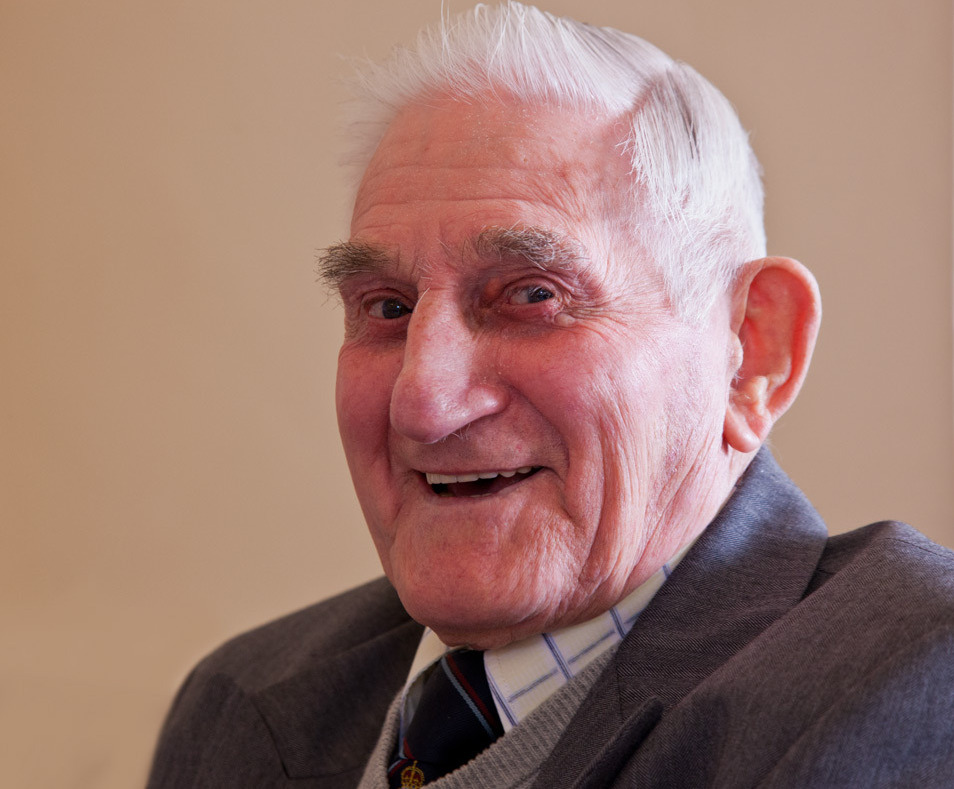
• The Lady •

• The Lady •
Classic Rembrandt Lighting in a modern street portrait
Click image to view large
• The Lady • by Netkonnexion, on FlickrExternal link - opens new tab/page


There is a beauty in simplicity.

I love to make street portraits, simple characterisations of people in their real lives. The street photographer thrives on the capture of the moment in someone’s life that just says a little about who they are… a moment in the life of a person you will never know. In this post I am going to look at how best to capture a street portrait.

1. Eye to eye

Out there on the street you a part of the scene – creating a momentary rapport with your street subjects. People like to communicate. And, they like to see communication. When you take a street portrait try to get your subject looking at you. If they are, they are communicating with you. The viewer of your photograph will be a part of that correspondence too. It will pull them in. Work at the eye level of your subject. Explore their faces through their eyes. Your capture will have much more power. If you are able to capture them looking in your direction, make sure the eyes are in focus too. This is good advice for any photograph, but it is critical for portraits. If the eyes are out of focus any appearance of communication will be lost.

2. Understanding the background

Every subject exists in some sort of environment. However, street portraits don’t allow much control over the background. Sometimes that can ruin your shot. A street portrait is about your subject. If there is too much going on around your subject then it can be a distraction. It takes the viewers attention away from the person you are showing them. When you are doing street portraits you can control the background in two ways – capitalise on it or get rid of it. If it is interesting, not too distracting, and puts your shot in context, then go for a deep depth of field (say, f11). That way you show your subject in the full light of the city environment. On the other hand if the background is complicated, distracting, or just uninteresting – go for a wide aperture and shallow depth of field. If your subject is away from the background your subject will stand out leaving the background out of focus.

3. The other people round about

If your subject is a part of a group then include the group. However, if they are not in a group portrait the other people round about can add to the shot or create a distraction. Try to make your shot pick out your subject or the group they are in. If you are trying to do a street portrait then your concentration should be on the subject you are trying to show. If you are more interested in your subject with their group then the relationship is important. Fix on that and bring it out.

The point of street photography is to show something coherent. If what you show is simply the chaos of a street scene, most of the time the impact will be lost in the chaos. When there is more than one person in your scene you need to bring out relationships, coherence or some sort of point that makes the shot interesting. There is nothing wrong with capturing a group of people as long as the capture has a point. Tell a story, bring out the meaning.

• Paper hats •

• Paper hats •
Pulling a group portrait together requires a coherence, collective story or central interest to the shot.
Click image to view large
• Paper hats • By Netkonnexion on Flickr External link - opens new tab/page

4. In the best possible light

The character of the light is one of the most important aspects of the shot. There is no single rule for lighting but it certainly helps to have an idea about the basics. In the photo above, “The Lady”, you will notice the triangular patch of light on her left cheek. This is a portrait lighting situation called “the Rembrandt” after the famous renaissance painter who pioneered this lighting. The form of the light/shadow helps show off the shape of the face and highlights the cheeks beautifully. In this case her eyelashes cast an interesting shadow and add character to the shot too.

When you are taking street portraits it helps to know about basic portrait lighting. The light and shadow on your subjects face is important. The wrong light can affect the form and shape of your subjects face, be unflattering or even create odd contrasts or miss-shape the face. It can certainly create a distraction if it is wrong. If you want to know more about how to light the face for portraits then check “Simple positions for classic portrait work”. It is the face that gives the most character to your subject. A beautifully photographed face is the foundation to a great shot.

5. Shoot many shots

No one should just be machine-gunning shots. Look for great shots and take them with care and consideration. On the other hand, you really want to make your trip worthwhile. Concentrate on bringing out some of the points above, but make sure you take lots of shots. Street photography is an uncontrolled situation. To ensure you get the best out of the subjects you see you will need to follow up on as many interesting points as you can. Things change fast – you may not get a second chance. Look, study, consider, frame, shoot – a working sequence of steps for a great shot. If you keep spotting interesting things… do your best to capture them.

find out more...Photokonnexion tips by email
If you enjoyed this article please sign up for our
daily email service.
                                                 Find out more


By Damon Guy (author and editor)

Netkonnexion

Damon Guy (Netkonnexion)

Damon is managing editor of Photokonnexion.com with professional experience in photography, writing, image libraries, and computing. He is also an experienced, webmaster and a trained teacher. Damon runs regular training for digital photographers who are just starting out.
See also: Editors ‘Bio’
By Damon Guy :: Profile on Google+


Can you write? Of course you can!
Write for Photokonnexion...

We would love to have your articles or tips posted on our site.
Find out more…
Write for Photokonnexion.

Three “laws” of street photography that will help you

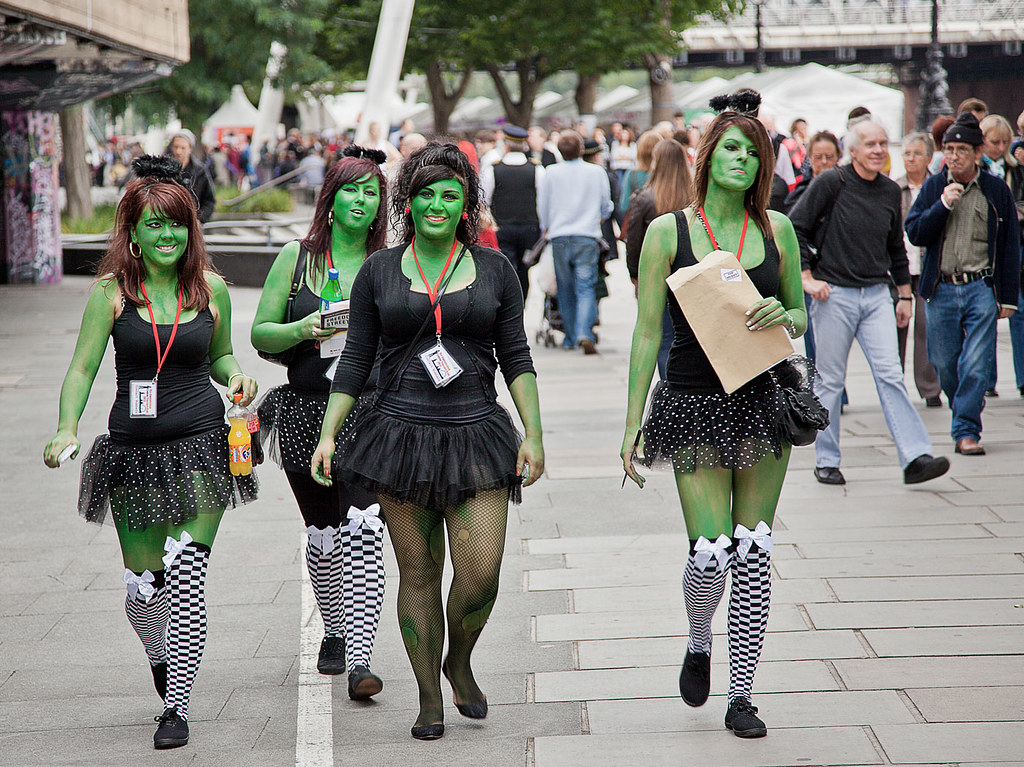
• Green Girls •

• Green Girls •
Click image to view large
• Green Girls • By Netkonnexion on Flickr External link - opens new tab/page

Street photography is not as chaotic as you imagine.

Most people behave in predictable ways in public. Understanding the general “laws” of street photography can really help you get the shots you want and capture the most interesting characters. Here are three ways that you can get ahead as a street photographer.

Outrageous people

When people are out and about enjoying themselves, especially in groups, they love to be photographed. The more outrageous they are presenting themselves, the more they love to be in the frame. They have made the effort to be “stand-outs” and so they are! More to the point they love to have photos taken because it shows they are the centre of attention. Groups like the green girls above just love to show off. And, don’t we love it too! So, for a bit of carnival fun, our first law is…

The photographers law of street stand-outs: The more outrageously dressed someone is, the easier it is to get a street photograph.

Hiding in plain sight

Be obvious, better still, be official looking. Nobody will question you taking photos. At lunchtimes I used to go out taking street shots. I wore a suit, had a tripod, and a Canon 5D. Sometimes I even wore a fluorescent jacket. I would put my tripod up in the middle of the pedestrian precinct and take photos of anything I wanted – nobody asked questions.

When hiding in plain sight, never look at someone directly. There are three little tricks to this:

  • When you are looking through the camera people cannot tell what you are looking at. If you use a wide angle lens you get a general view. Keep the camera pointing in the general direction of interest. You don’t even need to have the lens pointing directly at individuals. As people walk in and out of view you can snap them and they never know you are doing it.
  • Spend a long time looking through the lens – poised. People will walk in and out of the field of view and never guess you are watching them. All the while you are snapping away. Crop them into position later. With a wide angle shot you have plenty of scope to change the composition on-screen later.
  • If you are doing some spotting, not looking through the camera, make a big effort to “look past” people. Make it look like they are just in the way. People soon lose interest. Bingo – you have the shot and they are none the wiser.

So, for our every day photography in the high street our second law is:

The photographers law of sticking out like a sore thumb: If the photographer is obvious, the subject will be oblivious!

Candid or “can, but didn’t”?

The candid shot is a part of the business of being out on the street. However, not every shot has to be a candid. Interacting with people, getting in close and watching them pose, work or play is also a part of the scene. You probably think it’s difficult to stroll up to strangers and ask to invade their privacy with a camera. Its not as difficult as you imagine. Most people are pretty flexible. If you show an interest in them, generally they like to show cooperation. The problem is with the photographer. I have heard photographers say, “yeah, I could of spoken to them, but I couldn’t be bothered”. What they really mean is: “I would love to have chatted with them and got some shots, but I was worried about rejection”.

Here is some news. It is not as bad as you think. If you do get rejected just walk away. Try someone else. Actually, rejection does not happen very often. Most of the characters you want to photograph are quite pleased to be involved. Be polite, chatty, fun, complementary and respectful and most of the time you will get what you want. Pick your subjects for their character, presence and interest and you will probably find that they are pleased to share with you. Get in close and personal, be enthusiastic and involved. You will be a part of the behaviour, and a part of their lives. If they want copies, send them some. Then you have given them something in return for their posing. This is the third law:

The street photographers law of proactive interaction: If you don’t ask you won’t get!

If you want to be a street photog…

You have to develop and practice a number of strategies. Street photography is a fast and fun activity. Sometimes the direct action approach works best. Other times the candid approach works. However you choose to do it you will find it’s not that difficult. Actually the most difficult thing is starting… and only you can sort that out.

find out more...Photokonnexion tips by email
If you enjoyed this article please sign up for our
daily email service.
                                                 Find out more


By Damon Guy (author and editor)

Netkonnexion

Damon Guy (Netkonnexion)

Damon is managing editor of Photokonnexion.com with professional experience in photography, writing, image libraries, and computing. He is also an experienced, webmaster and a trained teacher. Damon runs regular training for digital photographers who are just starting out.
See also: Editors ‘Bio’
By Damon Guy :: Profile on Google+

Wait for the shot – an easy guide

• Contorted •

• Contorted •
Wait for the right moment. What would there be in this picture without the bird?

Every great shot is a splendid moment in time

A significant difference between an accomplished photographer and a “snapper” is the insight to wait. Realising a potential shot at the right moment is the supreme judgement call. Microseconds or months – it makes no difference. Understanding the visualisation and committing to the time element are skills great photographers cultivate.

Seeing the moment

Once the idea comes to mind you have the basic material for the most important moment in the life of a great image – it’s visualisation. While visualising the shot you have to consider all the details including the timing. The image above would have been very uninteresting if not for the bird. I first saw this shot from a quarter mile away and no bird. After watching the bird alight and fly several times I worked closer and waited. The capture at that moment made the shot. Knowing the moment is a critical visualisation skill.

How to wait…

Watchful waiting: Sometimes your visualisation has shown you the shot you want to make. However, conditions have to be right. The right people, light, weather, things… it all has to come together and you need to watch for the right time. Could be a long time, but you can wait.

Lying in wait: You have seen the shot. You know it is going to come together. You are there, waiting for that one piece to fall into place. A person to walk into the right space; a car to drive onto the ferry; a skier to make the jump… it will happen! Wait for it, wait for it: click!

Passive waiting: You have in mind a shot. It is an agonising itch. You are not sure how, when or where it is going to happen. You just have to wait for things to start coming together. Maybe you need to find the right location; perhaps you have not seen the right fashion accessory; need access to the right car? This is a sort of one-shot project. At some time you will know the time is right and you can then work to put together the shot. I have three of these in mind right now… one day; one day.

find out more...Photokonnexion tips by email
Enjoying this article? Please sign up for our
daily email service.
                                                Find out more

Repeat waits: Often the situation is wrong. I have some landscape shots I want to make. I know they are right, but I have to get the right weather. It is a 250 mile drive, so I have to make an effort to get there and wait. So far one image has eluded me 6 times. I will try again… and again.

Active waiting: Every street photographer knows this one. You are observing, hunting, seeing, looking for the moment, the right move, just the right character. Then suddenly the light and the person and the move all happen… the decisive moment – click!

• Coming And Going •

• Coming And Going •
Click image to view large
• Coming And Going • By Netkonnexion on Flickr External link - opens new tab/page

Constructive waiting: You have your idea. You have visualised every detail. Now you need to put it together. You need to buy a particular candle; to find a specific book; to contrive just the right mood and lighting. Then, after a few days, it all comes together and the production can start. People, props, positioning – perfect… click. Aaaah!

Wait! There’s more…

There are bound to be other types of “wait”. You may call them something different to me. Whatever, I think you can see, waiting is not only a critical aspect of your visualisation… it is also a fundamental part of the life of your shot.


Can you write? Of course you can!
Write for Photokonnexion...

We would love to have your articles or tips posted on our site.
Find out more…
Write for Photokonnexion.


By Damon Guy (author and editor)

Netkonnexion

Damon Guy (Netkonnexion)

Damon is managing editor of Photokonnexion.com with professional experience in photography, writing, image libraries, and computing. He is also an experienced, webmaster and a trained teacher. Damon runs regular training for digital photographers who are just starting out.
See also: Editors ‘Bio’
By Damon Guy :: Profile on Google+

Fantastic street photography insights by the master himself

HenriCartierBresson_TheDecisiveMoment

Henri Cartier-Bresson – (August 22, 1908 – August 3, 2004)
The father of modern street photography and photojournalism

Street photography… like using your eyes as radar.

Cartier-Bresson sought the detail of peoples lives in an instant of time. His legacy lies in understanding the moment of capture – the instant when the power of photography is expressed.

Cartier-Bresson’ insights are so different to the modern photographer. Today we spend endless conversational moments discussing the importance of the latest camera body, the best lens, the latest electronic photo-gizmo… Cartier-Bresson was an early adopter of the old film format 35mm SLR. After World War II he travelled the world, particularly India and the Far East, and saw some of the most momentous political upheavals of our time. The world he saw was raw, harsh and yet vital and dynamic. In those times of upheaval what he saw was not hardship and loss like so much modern photojournalism. He saw vital but ordinary moments in the lives of ordinary people.

The essence of the Cartier-Bresson style was about the “decisive moment”. He saw geometry, pattern and structure through the viewfinder. In doing so he also saw chains of events, micro moments, adding together and creating a moment where the aesthetics and the story were expressed in the shot. In the video (below) he talks about how he knows that moment is the only moment that the photograph would be right.

The power of his insight as a street photographer lies in his ability to see meaning and aesthetics in the moments when he took each shot. He did not spend hours on consideration of his equipment. He spent hours on the philosophy of the “instant” about which each photographic moment was pivotal. He saw into the “seeing of the moment”. It is that moment, if captured just right, that a picture is transformed into an image in the viewers mind. Capture any other moment and the picture remains only a vestige of an unseen event, it does not create the image.

The vitality and sheer energy of his photography and insights is beautifully summed up by this video. It is about the essence of his photography, not about the act of “doing photography”. Modern photographers spend too much time “doing photography” and too little time understanding the implications of what we show our viewers. Cartier-Bresson beautifully sums up his thinking in this video. I have transcribed some of his energy filled comments after the video.

Henri Cartier-Bresson – The Decisive Moment

Oracio Alvarado  External link - opens new tab/page

Some interesting comments transcribed

Some of the comments made by Cartier-Bresson beautifully sum up his thinking. I have edited them a little because the quotes in the video are edits and because his English, although excellent, falters a little in places…

To interest people on far away places… to shock them, to delight them… it’s not too difficult. It’s on your own country – you know too much when its on your own block. It’s such a routine, going to the butcher, er…, it quite difficult… in places I am in all the time, I know too much and not enough. To be lucid about it is most difficult… But your mind must be open. Open-aware. Aware.

(Photography:) It’s like having a search light, a radar… And that’s why to anybody who has done ten good photographs in his life it’s interesting (photography) because its a consistency. Its always re-examining things where you are freer and go deeper.

A camera is a weapon, you can’t prove anything. But at the same time it is a weapon. Not a propaganda means – photography, not at all. But er.. its a way of shouting what you feel.

The camera can be a machine gun… a psycho-analytical couch… it can be a warm kiss… It can be a sketch book, the camera.

…That’s strictly my way of feeling, I enjoy shooting a picture, being present, its like saying “Yes!”, “Yes!”, “Yes!”… Photography is like that, its “Yes!”, “Yes!”, “Yes!”. There’s no maybes. All the maybes should go to the trash. It’s an instant, it’s a presence. Its a moment. It’s there. Its the respect of it, the enjoyment of it. Yes! Its an affirmation. Yes!

Various quotes
Henri Cartier-Bresson
(August 22, 1908 – August 3, 2004)

find out more...Photokonnexion tips by email
If you enjoyed this article please sign up for our
daily email service.
                                                 Find out more


By Damon Guy (author and editor)

Netkonnexion

Damon Guy (Netkonnexion)

Damon is managing editor of Photokonnexion.com with professional experience in photography, writing, image libraries, and computing. He is also an experienced, webmaster and a trained teacher. Damon runs regular training for digital photographers who are just starting out.
See also: Editors ‘Bio’
By Damon Guy :: Profile on Google+

Get talking to your street photography subjects…

Street photography: It helps to talk to your subjects!

Street photography: It helps to talk to your subjects!

The communications element in street photography…

Really, there are so many different ways to approach street photography that it is no surprise that people don’t know where to start. Today Mark Wallace discusses his communicative approach to the art. While some tend to be observers of people by capturing candids, he really likes to get into conversation and becomes a part of his own scene.

In the last street photography video, “Famous street photographer talks about his work” we saw Travis Jensen using a compact but fully functional camera. In the video today Mark Wallace uses a full frame, full sized DSLR. There is a debate about the camera you use in street photography. Do you go with a big DSLR and risk being really intrusive? Or, do you go with a little camera and risk not having control.

These variations on a theme are fine. Street photography is all about doing what you do best. There is no one way to be a street photographer. Everyone takes their own approach. This is exactly what is meant by your personal style. It is your approach, your way of doing street photography.

Digital Photography One on One: Episode 70: Street Photography

While street photography is endlessly fascinating the fact that we all take different approaches means there is always a benefit in listening to other peoples experiences. It helps you to think around your own approach. So, see what you make of Marks’ spin on the subject. Enjoy!
SnapFactory  External link - opens new tab/page

find out more...Photokonnexion tips by email
If you enjoyed this article please sign up for our
daily email service.
                                                 Find out more


By Damon Guy (author and editor)

Netkonnexion

Damon Guy (Netkonnexion)

Damon is managing editor of Photokonnexion.com with professional experience in photography, writing, image libraries, and computing. He is also an experienced, webmaster and a trained teacher. Damon runs regular training for digital photographers who are just starting out.
See also: Editors ‘Bio’
By Damon Guy :: Profile on Google+

Five easy tips for better photos in difficult weather and light

Its easy to make weather excuses, but….

We can actually find a way to shoot in almost any weather situation. Here are some tips to get the shot even though the weather conditions are not ideal for a photograph.

1. Rain…

Cameras hate water. If there is a sure fire way to ruin your equipment, get it wet. So we want to dodge the rain shots. Actually rain is fun. You don’t need to be shooting right in the rain. Most of the time there is cover you can use to work from for your shot. Shop fronts, cars, through open windows, under canopies… you can think of thousands of rain hides if you try. And, rain provides lots of great things to shoot too. Rain is a great cleanser. The pavements and side roads are dust-free, shiny, or with splashing drops and running water. Yet life goes on. Street photography becomes dynamic, frenetic and full of new behaviours. People are doing things they normally do not do. They run, they put up umbrellas, they crowd under cover… lots of great behaviours that often do not get photographed. Look to catch people in the puddles, jumping, dashing for cover. Look for colours and reflections. Look for droplets, wet surfaces, running water. Most of all try to catch the reactions of people as they try not to get wet. Rain is great fun. Don’t hide your equipment away. Get out and take some great shots. After the rain look for skyward glances, great reflections, splashes and people emerging from cover.

2. High noon…

A high and harsh sunlit situation is not good for any kind of photography. Normally we think of it as pretty awful for any kind of portrait shot. The direct light creates washed out, over-exposed areas of the shot. The faces look flat and colours lose the subtle tonality. You can still get a great shots though. Seek out some cool, even shade. Under the canopy of shops or malls is ideal, or maybe within the shade of a substantial tree. Look for anything that provides enough shade for you and your subject to get out of the direct sunlight. However, stay near to the main sunlight area. The direct sunlit area will act as your main light source. The shade will act as a diffuser. Now, make sure you do not shoot into the direct sunlight or deeper darkness of deep shade. Try to keep your shot on your subject and make sure any background you use is also in the same light-shade level of intensity. That way your contrasts and colours will all be within the same dynamic range of light – which your camera deal with. However, the main light source will be diffused – creating a lovely soft, bright light source. Remember, if you shoot out of the shade into the sun you will find the contrast range too high. You will get bright highlights and over-exposure which will draw the eye away from your subject. So keep the shots tight to the light level you are working within and your shots will be fine and bright. Don’t shoot in mixed or dappled light.

3. Insufficient shade?

Avoiding very hard light or direct sunlight makes sense but what if you cannot find enough shade for you and your subject to be in the same light. If you are trying to photograph a person the impact of this direct light is particularly hard on their face and unflattering. Unfortunately putting your subject into the shade can make the situation worse. The darkness in the shade contrasts strongly with the bright light outside where you are standing. So you get bright spots in your shot and harsh darker areas in the deeper shade – very distracting. To overcome this high contrast situation take your shot on the shadow line. Line up the person you want to shoot on the shadow edge so the bright light is softened. In this intermediate place your subject gets the golden glow from the brighter light but it is softened by the slight shadow.

To help your camera to cope try to shoot from the same half-in half-out of shadow position too. The contrasts will not overpower your sensor there. If you get it right you will split the light to make it just right. Carefully placed you will capture the lovely sky and background but not lose detail in the shadow-darkness under the shade. Be careful not to get dappled light from sun through the leaves, and make sure the shadow line does not cross your subject. Bright contrasts and sharp shadow lines on the subject are very unflattering. Instead shoot along the half shade into the brighter light utilising the foreground weaker light as your main source for the subject.

4. The sun flattens the landscape

Often, particularly on holiday or when out on a shoot, we cannot wait for the golden hour. We are in a place where there is a deadline to move on and you want to get the shot. Unfortunately the high, direct sunlight flattens everything, eliminating shadows and ironing out colour tones. The light is boring and harsh and the shadows minimal.

How do you get the landscape? Include more sky than usual. Often in these situation the most interesting lighting is for the sky. The clouds and far away places look good. So expose for the sky and reduce the amount of landscape you include. This means using the sky as the main bright source of light. Point your focus point to a cloud. If the autofocus ‘hunts‘ and will not focus turn it off and focus manually. Make the sky your subject and concentrate on the distance and sky. This may mean some of your foreground will be slightly underexposed. However, it is easier to brighten the foreground or a near subject later in post-processing if you have exposed for the sky.

find out more...Photokonnexion tips by email
Enjoying this article? Please sign up for our
daily email service.
                                                Find out more

5. Dreary, grey diffused sky light

Another bad light situation for the photographer is the dreary grey day. Uniform light from across the sky leaves little or no shadow detail anywhere. Everything looks flat and dead. The problem here is there is nothing in the landscape that provides relief for the greyness. The sky is difficult too – you cannot do foreground shots as the uniform lack of colour or shadow means everything is pale and uninteresting. The distance has lost its sky appeal too. Even exposing for the sky creates almost uniform grey.

Well, this is the time to get out the flash. Off-camera flash is best, although pop-up flash will also do the trick. Get close to the ground or a surface with great texture. Then, shoot along the surface with the flash. If the flash is off-camera set it off to one side so it exaggerates ground shadows. If you are working with pop-up flash then make sure you work with the shadow at its maximum. This may mean shooting with your camera upside down so the light is really close to the surface and the optical axis is across the surface lit by the flash. If you use a relatively wide aperture, these low-level flash shots will bring out shadow detail in the foreground and leave the distance in bokeh and out of focus.

Some places to find great surfaces for this type of shot are low grasses, sandy or gravelly surfaces, tarmac, along road lines, autumnal leafy forest floors, bare rock… well, you get the idea. Seek out any surface that provides texture for you to capture. Lots of small to medium undulations and detail is best. Large objects will block the foreground so reserve them for the middle distance.

Remember the five rules…

The key to difficult weather and light situations is…

  • Find the right vantage point to shelter/shoot from
  • Maximise the opportunities for spotting unusual behaviour
  • Make the most of the weather opportunities (sky, puddles, splashes etc)
  • Keep the light where you are shooting within approximately the same dynamic range
  • Look for, or create, light situations that exploit texture detail


By Damon Guy (author and editor)

Netkonnexion

Damon Guy (Netkonnexion)

Damon is managing editor of Photokonnexion.com with professional experience in photography, writing, image libraries, and computing. He is also an experienced, webmaster and a trained teacher. Damon runs regular training for digital photographers who are just starting out.
See also: Editors ‘Bio’
By Damon Guy :: Profile on Google+