Tag Archives: Approach

How to use negative space effectively

• Boats •

• Boats •
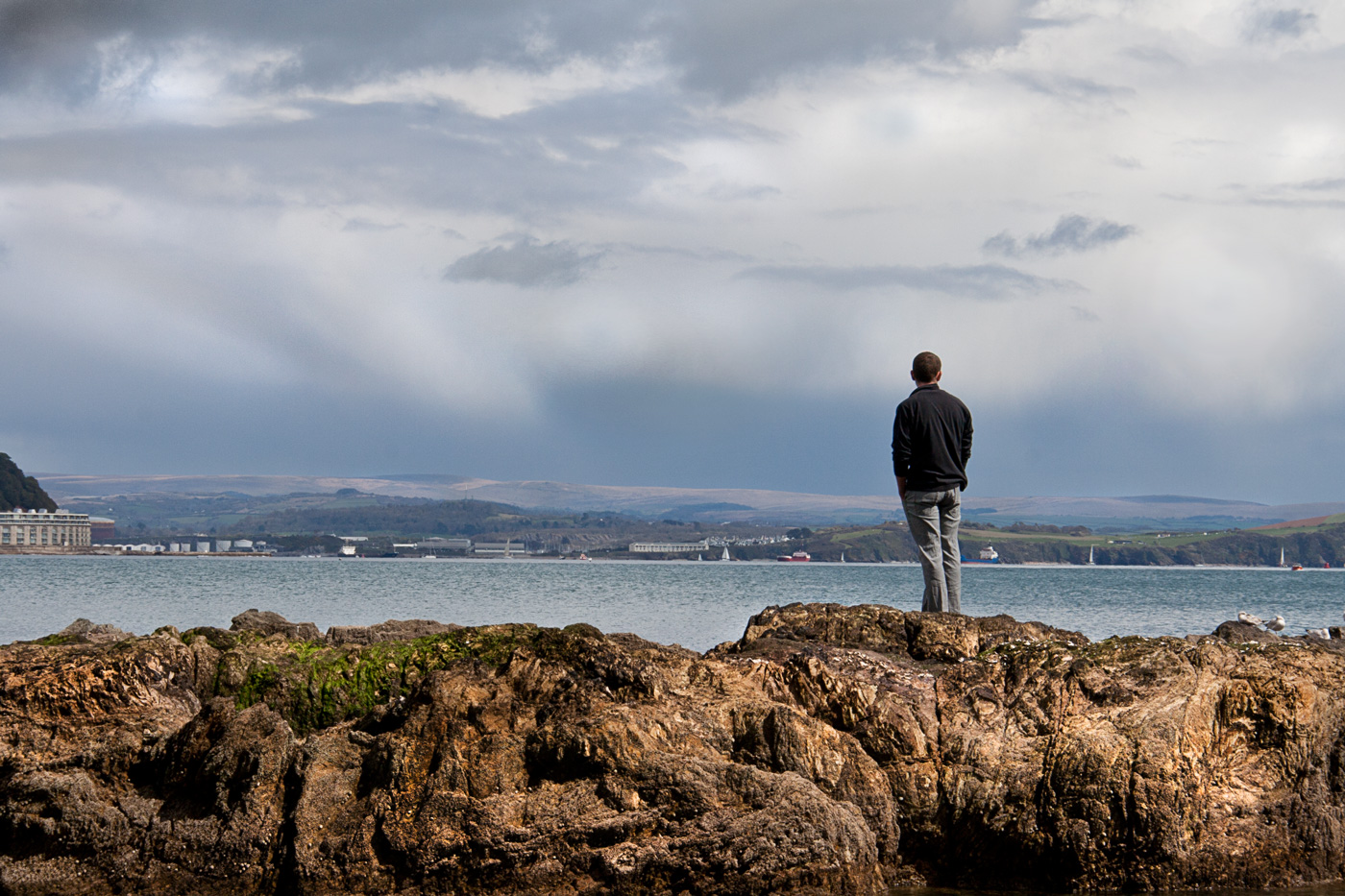
Picture by Mike Browne (from the video)

Composition that is not there!

The space that surrounds the subject and fills the gaps between important objects in your picture can be described as negative space. In some ways it defines the objects you see. In another way it is not really there. Instead the background is what you see.

The concept of negative space is important. The shape of your subject is created, at least in part, by the space around it. The space helps to define its character too. How much space surrounds your subject, and the type of space, all pass messages to the viewer about your shot.

Negative Space in Photography

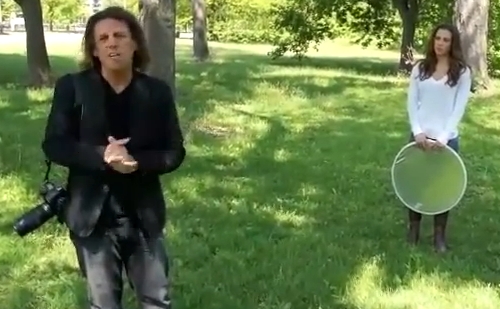
Negative space is a strong artistic element yet it is not always obvious how to use it in your photography. Seeing negative space, and using it, takes a little practice and some ideas on how to place the elements in the shot. In the video Mike Brown shows us, despite the annoying balloon, how to use negative space and how to place your subject. He shows us how to use the balloon too – eventually.

find out more...Photokonnexion tips by email
If you enjoyed this article please sign up for our
Tips by email service.
                                                 Find out more


By Damon Guy (author and editor)

Netkonnexion

Damon Guy (Netkonnexion)

Damon is managing editor of Photokonnexion.com with professional experience in photography, writing, image libraries, and computing. He is also an experienced, webmaster and a trained teacher. Damon runs regular training for digital photographers who are just starting out.
See also: Editors ‘Bio’
By Damon Guy :: Profile on Google+


Can you write? Of course you can!
Write for Photokonnexion...

We would love to have your articles or tips posted on our site.
Find out more…
Write for Photokonnexion.

The top twenty phototips that you should know

20 spots - twenty tips

• 20 spots – twenty tips •
Click image to view large

Learning photography is about…

Doing the simple things really well. Although there are a lot of things to learn, the important ones are a few things you do over and over again. If you improve them you will automatically improve your photography.

Work on these to make the biggest improvement
  1. A proper stance will provide a proper, steady hand-held camera position.
  2. Go everywhere with your camera. Use it every day – improve every day.
  3. Learn with what you’ve got, better equipment will not improve your skill.
  4. Three essentials – camera, lens, tripod. Learn to use them all equally well.
  5. Get close, fill the frame, your shots will probably be better.
  6. Think about every shot before you push the shutter button.
  7. Count to two before taking your camera away from your face.
  8. Never just look at others’ photos – do a critique every time.
  9. Work on your composition skills at least as hard as your technical skills.
  10. Be inspired by other photographers, but develop your own style.
  11. Discuss photography as much as possible with other photographers.
  12. Look for contrasts in colour, light, shape and other variables.
  13. Declutter your shots, show it as simply as possible.
  14. Use natural light as much as possible – get to know its properties.
  15. The rule of thirds works more than 95% of the time.
  16. Try different perspectives, points of view and heights at each scene.
  17. Vary shutter speeds, ISO and aperture settings to experiment with exposure.
  18. Make people, and especially faces, a central study in your photography.
  19. Great photos can be found everywhere – you just need to look out for them.
  20. Be completely obsessed with the study of light and the language of light.

If you pay attention to these important tips you will find your photography will develop.

Photography becomes a way of life, but don’t make it the only thing in your life. You need other interests to bring new perspectives into your photography.

Most of all enjoy what you are doing. Photography should be fun… don’t take it too seriously. Laugh a lot.

find out more...Photokonnexion tips by email
If you enjoyed this article please sign up for our
Tips by email service.
                                                 Find out more


By Damon Guy (author and editor)

Netkonnexion

Damon Guy (Netkonnexion)

Damon is managing editor of Photokonnexion.com with professional experience in photography, writing, image libraries, and computing. He is also an experienced, webmaster and a trained teacher. Damon runs regular training for digital photographers who are just starting out.
See also: Editors ‘Bio’
By Damon Guy :: Profile on Google+

How to tackle the problem of reflections and highlights with glass

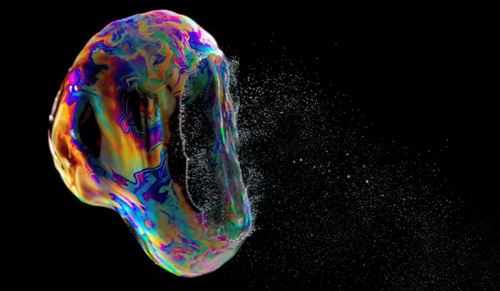
• Photographing anything translucent requires treatment that defines the shape •

• Photographing anything translucent requires treatment that defines the shape •
Photograph by Phillip McCordall

Make the best of your resources.

Making the best of your resources is important. Expensive equipment is out of reach for many photographers. Using simple equipment and home resources helps. Glass presents particular problems. This tutorial will help you to tackle the problem with glass and learn more about using simple resources.

The problem with glass

By its nature, the translucence and reflectance of glass creates special problems for photographers. Translucence means that the definition of glass is lost against the background. Reflectance means that general highlights and specular highlights in particular can cause problems. Success in photographing glass is about learning to control those things. It is all a matter of using reflectance to define the glass and placing the light in the correct way for it to illuminate.

Using a simple house light and white and black cards, this tutorial helps you to control highlights to emphasise the glass and not create nasty highlights. You learn about good quality composition with a glass and a few tricks of the trade. Win:win I think.

find out more...Photokonnexion tips by email
If you enjoyed this article please sign up for our
Tips by email service.
                                                 Find out more


By Damon Guy (author and editor)

Netkonnexion

Damon Guy (Netkonnexion)

Damon is managing editor of Photokonnexion.com with professional experience in photography, writing, image libraries, and computing. He is also an experienced, webmaster and a trained teacher. Damon runs regular training for digital photographers who are just starting out.
See also: Editors ‘Bio’
By Damon Guy :: Profile on Google+


Can you write? Of course you can!
Write for Photokonnexion...

We would love to have your articles or tips posted on our site.
Find out more…
Write for Photokonnexion.
Do you really understand what photography is?

The ramblings of a madman…

Photography is what we do with a camera that records part of the world where we point the lens. Then again, you probably realise that is not true if you have been reading this blog for a while.

The lens does not faithfully record the world – it is always slightly distorted. Numerous technical processes are involved in the translation of a scene into a picture. These all add their own distortions and variations on the original scene. The unique approach taken by the photographer in framing the shot creates its own view of the world which may be different to the next man. All that, and the perceptive filter of the viewer themselves, finally conjures an image beyond the mere recording.

So, what on earth is this thing we call photography? It certainly is not a mere technical record – nor is it a simple interpretation of a scene. Those two roots are important but are not the full story.

I was drawn to address this question, about the nature of photography, this afternoon. I was musing that I had not written a definition of photography in the “Photographic Glossary“. The latter is a collection of articles which have gradually grown since I started this blog. It is now a respectable introduction and background to a wide range of photographic words, phrases, concepts and items of equipment – and I add to it regularly. You can find it on the menu at the top of every page.

Meaning?

Each entry in the glossary needs research to ensure verification of the concepts, vocabulary and application. I think it important I check my facts. In attempting to research “photography” I came across a whole range of explanations which amounted to descriptive statements about:

  • derivation of the words which relate to aspects of photography;
  • the act of photography;
  • processes involved in doing photography;
  • processing in the production of a photograph;
  • history of photography
  • the technical issues;
  • photographic history;
  • postulations about the future of the equipment.

This is all interesting stuff. However, I still found it sterile.

It is important for ‘meaning’ to be attached to feeling. A technical description of the process of photography (film or digital) is interesting but devoid of personal meaning. I am a committed photographer. I love to do photography and I invest a huge part of my life in its pursuit. To me it is not a technical process although I go through a technical process to “do photography”. It is not just the statement about the meaning of a word (see – Definition: photography). Neither is it simply a picture. I am hoping that my picture will stimulate a living, three dimensional mental image in the mind of my viewers.

There is something more to photography than is explained by those sterile descriptions. It’s something which underlies all art, and which is really a step beyond the technical creation of the physical picture. Photography is an attempt by the photographer to communicate with the viewer. Each picture may lie somewhere on the continuum which divides a record of the world and an interpretation of the world. No matter which end of that continuum the picture lies, it speaks to the viewer in a unique way.

My thinking…

I think it sad that I spent several hours this afternoon trying to find real meaning to photography. Yet, through all the technical mumbo-jumbo, the physical processes and even the history not one article made a plain simple statement of commitment to the true depth of what photography means. So here is what I think we mean by photography…

Photography attempts to capture a view of the world with which the photographer communicates their particular meaning and perspective of a scene through a picture, and which if successful, will create a vivid image in the mind of the viewer.
Damon Guy, 09/06/2013

This is sticking my neck out so I expect to be shot down. What does “photography” mean? You tell me.


By Damon Guy (author and editor)

Netkonnexion

Damon Guy (Netkonnexion)

Damon is managing editor of Photokonnexion.com with professional experience in photography, writing, image libraries, and computing. He is also an experienced, webmaster and a trained teacher. Damon runs regular training for digital photographers who are just starting out.
See also: Editors ‘Bio’
By Damon Guy :: Profile on Google+

The Minimalist Guide to Successful Photography

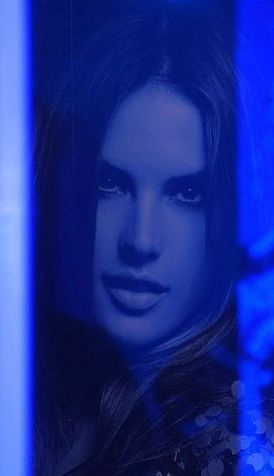
• Being a successful photographer is about doing things that are different •

• Being a successful photographer is about doing things that are different •
Photograph by Joe McNally

Work hard – do things to get noticed.

OK, it is not as simple as that. But it is a time-honoured route to success. Famous photographers go for the stunning shot. The video shows a world class photographer going to extraordinary lengths to get the shot. And, he certainly does that. Wow. Stomach churning stuff.

I just had to show you this video for its sheer tenacity. Joe McNally is an exceptional and successful photographer. He is also, after many years in the business, still getting the shots. This is the stuff that impressive photography is about. This personal project is how people like him stay at the top of the photography business… and the top of the world – literally.

Climbing the Burj Khalifa (The World’s Tallest Building)


joemcnallyphoto  External link - opens new tab/page

If you can keep cool under any circumstances, get the quality of shots that capture the eye and run a business you can be like Joe McNally. See… I did say a minimalist guide to success in photography!

find out more...Photokonnexion tips by email
If you enjoyed this article please sign up for our
Tips by email service.
                                                 Find out more

Do you find it difficult to photograph art?

http://farm6.staticflickr.com/5345/8977458941_2c55c81a0e_o.jpg

• The World Is A Different Place When Viewed Through Art •
Click image to view large
The World Is A Different Place When Viewed Through Art By Netkonnexion on Flickr External link - opens new tab/page

It’s all about interpretation…

We all have a little difficulty photographing art. We know that interpretation is important to the success of a piece – have we got the interpretation right? Should we hesitate when shooting art by others? Analysis paralysis could stop us doing anything. My view is we have to give it a try.

When photographing art there are two broad approaches. One way is to create a record shot which tries to represent the art as seen. You are producing a sort of factual postcard representation. The other is to take the shot putting your own interpretation on the piece.

Both these approaches are legitimate.

Some general points…

As with all photography there are some general principles that need to be established. In a nutshell we should try to…

  • Declutter the scene so the eye goes to the subject
  • Make sure our subject is the main focus of the shot
  • Ensure we have a clear purpose for the shot
  • Work hard to remove distractions (eg. bad focus or burnt out highlights)
  • Treat the subject with complementary light to bring out its best features

…these help us to ensure that we are conveying the meaning of our shot to our viewers.

The purpose

Clarity of purpose for a shot is an important part of crystallising our idea about how to present it. If we make a conscious decision about why we are taking the shot, it will help us to make the distinction between a record shot or an interpretation.

A judge at a photography competition once told me, “you should never put a picture of a piece of art in a competition unless you have put your own mark on the piece of art”. “Otherwise,” he said, “it is a record of someone else’s art”. For a judge that’s important. If it is a record of someone else’s work, what has he got to mark that is yours?

So, with photography of art I think you need a clear idea about your intentions. A record shot is about preserving the piece, ensuring that it’s essence is retained.

That judge I mentioned told a story. His friend was passionate about public art – pieces on public display in the open air. He travelled widely photographing sculpture. He always had something with him that he put on the sculpture. A scarf. A hat maybe. Sometimes a teddy bear. The strategic placement of that one thing was enough to add a new meaning. It was a sort of reinterpretation. The judges friend was creating a new work of art.

This clarity about “representation verses interpretation” comes up in many aspects of photography.

Often beginners are not aware of its significance. That is the reason there is often “something missing” in their pictures. The pictures of beginners often look sterile because they have tried to represent reality. The standard of their photography is not good enough to make the picture stand out. The picture itself is insipid because it lacks interpretation.

When someone has an artistic eye, even if a beginner, the interpretation they bring to a shot trumps the lack of technical skill. That is why some artists can create great images within a short time of first handling a camera. They know how to create an event in the imagination of the viewer – even if they lack the skill to create a great photograph. That event is the image that stays with the viewer.

Making the difference

Once we have established the purpose of the shot we should have a clear idea about some of the things that we can do to actually make the image…

Record shots: You are looking to create a clear, technically excellent representation. Work on sharp outlines and clear colours which are as close as possible to the original. Try to capture any essential textures, but also try to show the piece in its entirety. You will probably need to take a regimented progression of shots to do this. Typically a good record shot is one of a series. Record the full detail of the piece, capture it from all sides. Try not to embellish or exaggerate. Make a plain statement of its existence. Use plain light. However, if you only have time for one shot then make it as faithful to the original as possible.

Interpretation shots: You can let your imagination run wild. Anything goes. You are doing it to express how you feel about this piece. Get your feelings out there, exaggerate, magnify, close in, show it all or just enough… wild angles, odd views. You get the point. You are making the shot yours. You are doing some thing different.

Photographing art is one example

The principle of “expression versus representation” runs right through photography. Natural history shots are a case in point. We want our pictures of birds to be essentially record shots. We are looking for a faithful record of them. The trick with wildlife is to show them performing some behaviour which is peculiar to them.

You can probably think of other examples of the way this split affects your shots.

Once you become aware of this essential tension within every shot you can begin to work on the imagination or the representation in your own area of interest. It is critical to conveying meaning in your shot.


By Damon Guy (author and editor)

Netkonnexion

Damon Guy (Netkonnexion)

Damon is managing editor of Photokonnexion.com with professional experience in photography, writing, image libraries, and computing. He is also an experienced, webmaster and a trained teacher. Damon runs regular training for digital photographers who are just starting out.
See also: Editors ‘Bio’
By Damon Guy :: Profile on Google+


Can you write? Of course you can!
Write for Photokonnexion...

We would love to have your articles or tips posted on our site.
Find out more…
Write for Photokonnexion.
Using a neutral density filter

ND filters can be used to produce some great images

Lee Filters – Big stopper neutral density filter reduces the light by ten stops. You can produce great images like this one from the video.


Sometimes you need a long exposure…

However, to take a very long exposure in daylight will mean too much light will burn out your picture. So you need to turn down the incoming light. For that you use an ND Filter. Here is how they are used.

Remind me, why do I need this?

Remember, shutter speed controls movement blur. If you want to show a car looking blurred as it goes past you might set the shutter speed to about a fifteenth or thirtieth of a second. But what if you want to capture a much less obvious movement or a really slow movement? Say two minutes? Well, normally the amount of light coming in will burn out the shot. Of course you can use a really small aperture (eg: f22) and let less light into the camera. But on a bright day two minutes will still burn out the shot. This is where Neutral Density (ND) filters come in. They are specially darkened filters that cut the light down allowing you to extend your exposure. With one of these you can do some awesome effects.

10 stop Neutral Density Filter (video)

In the video we see the making of a picture (above) by using the Lee Big Stopper Neutral Density Filter. This ND filter is very dark, which takes down the light by 10 stops. It creates a great effect on of the water swirling under the pier. This is the darkest type of ND filter.

ND filter strengths

ND filters can reduce the light entering your camera for up to 10 stops. This allowed 2 minute exposures in the video. However, there is also ND2, then ND4 and ND8. Other strengths exist, but these are the most common. They allow you to have shorter exposures so you can adjust the exposure to the needs of your shot. You can also put them together so an ND8 + ND2 gives you an effective ND10 – the strength in the video.

ND Grad.

Another of these type of filter is the graduated Neutral Density, or ND grad. The use of an ND grad is quite specific. It is used to reduce the incoming light from the sky when you have a bright sky and dark ground. If you expose for the ground the sky burns out. If you expose for the sky the ground is too dark. The ND Grad. helps prevent the sky burning out.

The ND Grad. is dark at one end and clear at the other. The two zones meet in the middle where the clear graduates into grey. Put the filter over the lens so the line of clear/grey graduation lies on the horizon, darkening the sky. Now, you can expose for the scene and get even light distribution. The next video will show you how this type of ND is used.

Mike Browne  External link - opens new tab/page
Problems?

No, filters are simple and easy to use. There are some important things to remember…

Always use a tripod. It is impossible to hold a camera steady for more than about half a second. After that your image will start to get blurry.

You need to be quite precise about lining up ND Grads with the horizon. Take a little practice before going out to do the BIG shot.

The darker the ND Filter the more there is a tendency to impact on the white balance. Sometimes you get a blue colour cast, sometimes a red one. You can remove this in post production if you are using the RAW file format. Alternatively you can test the filter with your camera and adjust the white balance setting in-camera to correct for the aberration. Most of the stronger ND filters have this colour-shift tendency. it is exaggerated by the sensor type. CMOS sensors tend to magnify the effect.

Sometimes getting the exposure right is a matter of experimentation. Take a few test shots and make sure you do some “Chimping”.

If you are buying ND filters, especially ND Grads buy square ones. You can buy adaptors for these to fit any lens and it allows you get creative in more ways than round, screw-on filters that only fit one lens.

There are many different kinds of filters which produce a huge range of fun effects in-camera. Many of these effects cannot be processed into the shot later. The square filter system shown in these videos allows you to expand your collection and develop a new set of skills without buying an expensive filter for each lens.

ND Filter set…

3 full ND filters
3 graduated ND filters
Full fitting kit for a range of camera
and lens sizes.
10 Adapter Set + 6 Filter ND2 ND4 ND8 G.ND2 4 8 For Cokin P Canon Nikon Sony LF6

Please leave any questions or comments you have about these in the comments below.

find out more...Photokonnexion tips by email
If you enjoyed this article please sign up for our
Tips by email service.
                                                 Find out more


By Damon Guy (author and editor)

Netkonnexion

Damon Guy (Netkonnexion)

Damon is managing editor of Photokonnexion.com with professional experience in photography, writing, image libraries, and computing. He is also an experienced, webmaster and a trained teacher. Damon runs regular training for digital photographers who are just starting out.
See also: Editors ‘Bio’
By Damon Guy :: Profile on Google+