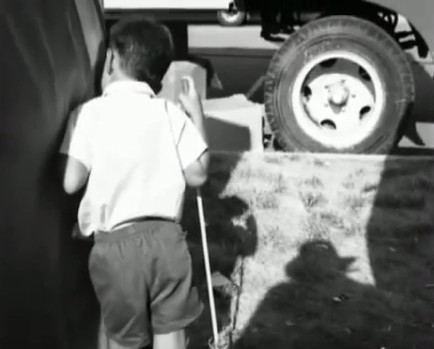
What do we really mean by street photography?
The concept of street photography covers a lot of ground and means many different things to the people who do it. Simple descriptions of street photography might include things like:
- Candid photographs taken in public places
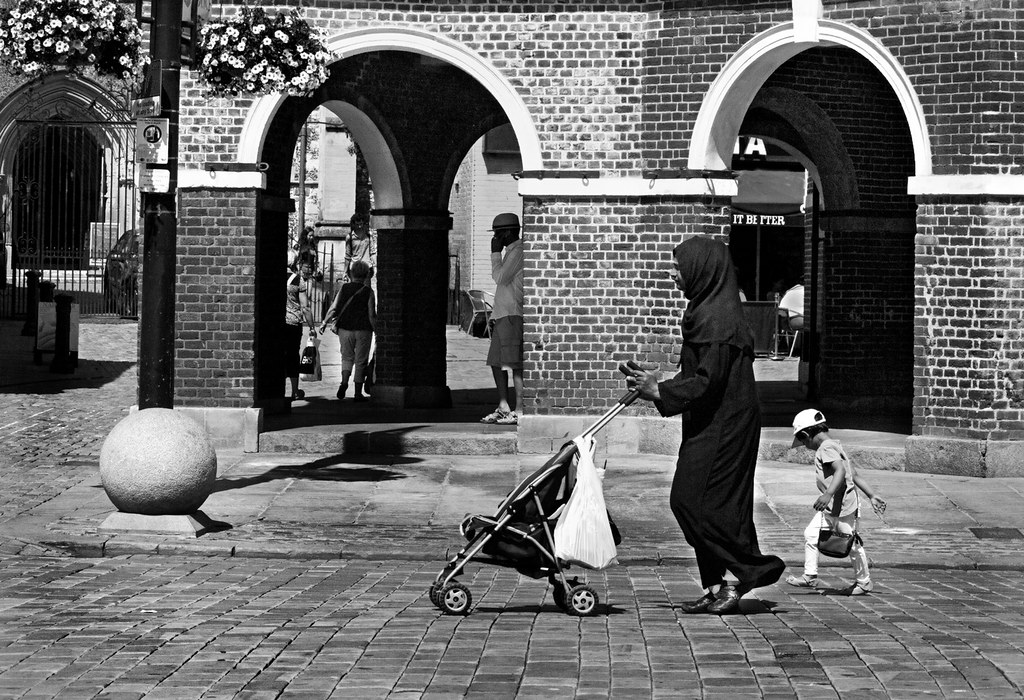
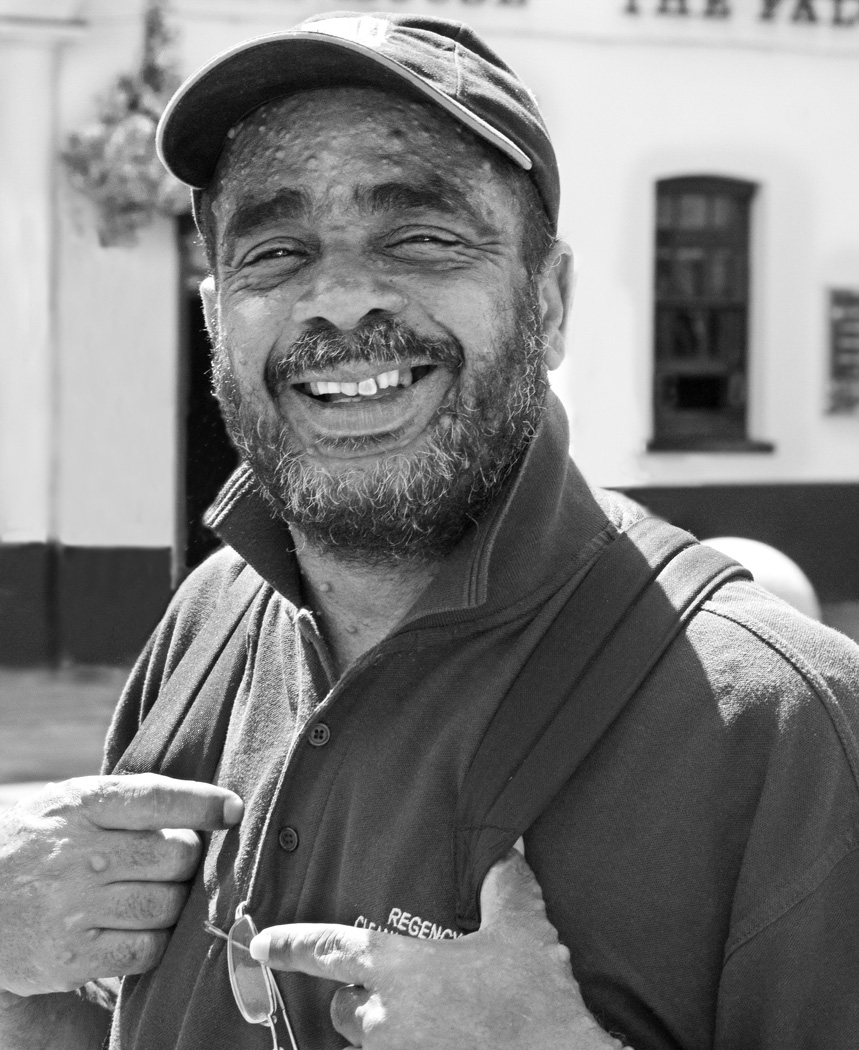
- Portraits and depictions of ordinary people out and about
- Pictures telling the stories of people living their lives
- The normal behaviour of individuals seen in public
- Extraordinary scenes in ordinary places
- The street environment with or without people
- Things which catch the eye photographed in public places
- Extraordinary sights amid people going about their daily lives
- A micro-social documentary through a still photograph
- The drama of an event in the every day lives of people on the street
Street photography is a broad spectrum subject. Mostly, street photography is about the sights and significant micro-events that attract the eye of the photographer in urban places or other popular places. The idea of “street” means where people can be seen. Or, where they “may” be seen. It is not absolutely necessary to have people in the scene. Although people usually provide the focus of interest.
In fact, beyond these simple descriptions of the craft there are other things. The need to have sympathetic framing, simple backgrounds, good composition and excellent timing go without saying – these are a part of photography in general. Beyond those there are other themes underlying the term “street photography”…
The environment
The ‘street” environment is as important as the people themselves in that it provides a context. The environment and the people together makes the scene interesting. Background provides the cultural context for the shot and so it is important to include it. Nevertheless, many street photographers will work to minimise the impact of the surrounding scene so they can focus the viewers eye on the behaviour of the people of interest. The choice to show the wider scene or to focus right in is both an aesthetic one and a contextual one. You have to consider what would make the picture as visually pleasing as possible and at the same time make sure you are able to show the subject in the best possible environmental context. Difficult choice – but an essential part of working the street scene.
Because the environment is important street photographers often prefer to work with lenses that give a wider angle than other DSLR users favour. A wider view captures the scene as well as the subject person. A common lens for street photogs would be a 35mm or 50mm fixed prime. These lenses tend to give you a more immediate correspondence with the scene you are in. They are close to the focal range and angle of view that the eye sees. They reduce distortion and give the impression of the scene through the photographers eyes. Street photography is a unique and real experience for the photographer. The best of them try to convey that experience in a very real way to the viewer too.
Black and white or colour
Most of the well known names in street photography worked with black and white film. Perhaps for this reason today’s street photographers tend to work in black and white too. It emulates an era of the past with a stark reality and a retro-cultural look about it.
Some street photographers dispute the (cynical) view that black and white is the medium of choice because it promotes a ‘retro’ atmosphere and see that as an insult, a cheapening view of their work. Instead they’d argue B&W street pictures have more impact.
It has often been argued that when you take colour out of a photograph it almost purifies the picture. Certainly much of the distraction is taken out. Colour does draw the eye. A Canadian photojournalist was once quoted saying…
“When you photograph people in colour, you photograph their clothes. But when you photograph people in Black and white, you photograph their souls!”
Ted Grant
There is much to be said for removing colour to see the inner person. However, it is not obligatory to work in black and white for street photographers. Your choice is part of the way you present the scene you are photographing. There are merits in colour and in B&W media. Making the right choice for your picture is a part of the success of your final image.
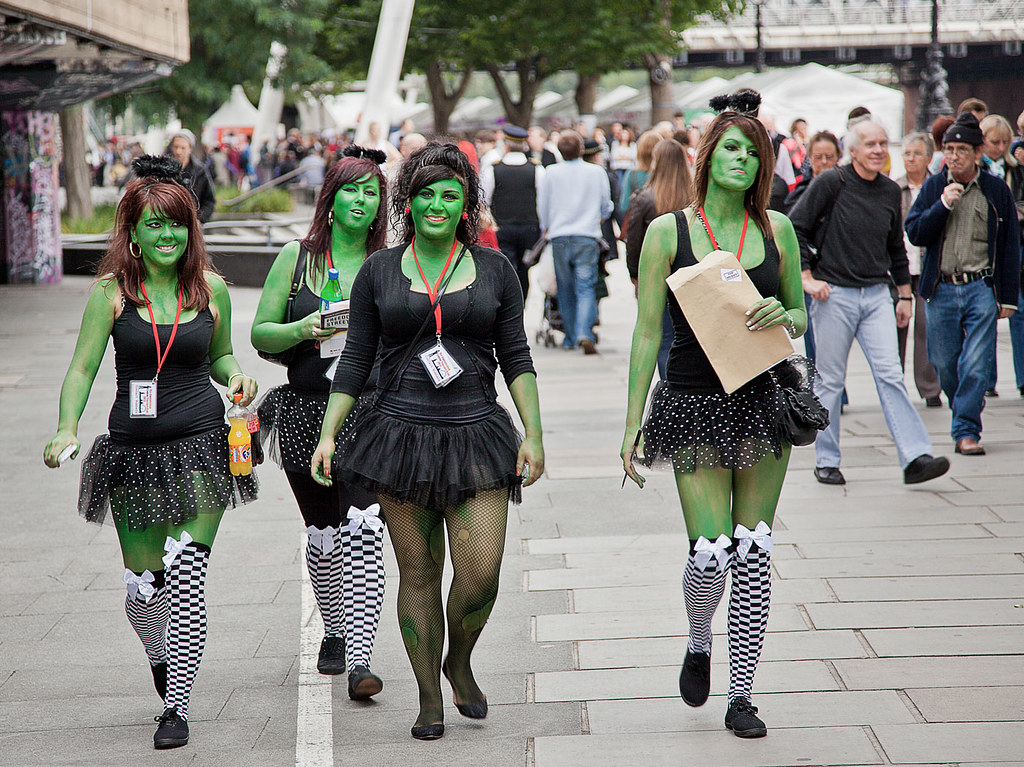
• Green girls •
Click image to view large
• Green girls • By Netkonnexion on Flickr 
Sometimes pictures simply don’t work in black and white. You have to make the choice. There are no rules that say you must do street photography in monochrome.
Cultural context
Street photography is a worldwide phenomenon. However, there are undoubtedly cultural contexts that tend to make certain places more interesting. That is especially the case when the viewer is seeing something they consider exotic or out of the ordinary. Street photographers take pride in finding the ‘unusual’ in otherwise ‘everyday’ places. So where possible street photographers will search out the poorer environments, the degenerating places and the places that their viewers would not go themselves. On the other hand they may find interest in the very essence of modern culture and how that actually contrasts with local way of life there. In this way they can help their viewers see another culture, observe different behaviours, see another way of life or shock their viewers about how others live.
Seeing other cultures and other places in the world is part of the wider scope of the art. You may choose to travel to far away places. However, street photography is found everywhere. In your local town, urban area or event space you can find interesting and captivating scenes everyday. Watching your fellow citizens is great sport. It’s funny, serious, interesting, frightening and enlightening. Showing your culture in all its facets is interesting. It requires a strong sense of place, character and understanding of your subjects and where they are.
It is often the deep contrasts that make a street photograph successful. The ordinary and unremarkable are the things that are not celebrated because of our familiarity with them. After all they are in our daily view. Strange or culturally contrasting situations draw the eye. It is a part of the street photographers observational skill to isolate and therefore to highlight these inconsistencies in our view of the world. It is not about travel, getting around the world, but seeing into our own locality and monitoring the differences between each of us and the others who share our streets.
Taking this alternative look at our own cultural space is one of the really difficult things about street photography. Henri Cartier-Bresson, sometimes referred to as the father of street photography, once said…
To interest people on far away places… to shock them, to delight them… it’s not too difficult. It’s in your own country – you know too much when it’s on your own block. It’s such a routine… it’s quite difficult… in places I am in all the time, I know too much and not enough. To be lucid about it is most difficult… But your mind must be open. Open-aware. Aware.
Henri Cartier-Bresson
In his strong French accent, he was trying to express the difficulty of overcoming the ‘ordinary’ view and seeing the extraordinary things about our culture that are in plain sight.
Street photographers are the ultimate people watchers and observers. They look for the extraordinary in the ordinary. They are able to articulate culture through the medium of the very people they sit next to on the bus. They are in the scene and a part of the picture they are creating with others around them. At the same time they are documenting it and living it, but bringing out the things that other people miss.
Origins
Much of the body of street photography was generated in the 20th century. During the 19th century the film speeds were low and exposures too long for effective fast capture of people going about their everyday lives.
There is currently a huge resurgence of interest in street photography. It has come about partly as a response to a renewed interest in photography. It is also partly due to recent significant collections of work from street photography artists being published around the world. A whole genre has developed from the interest of key individuals from photographic history. Some of the great street photographers we recognise today worked in the years from around 1900 through to the 1980s. Some of the well known names are…
- Henri Cartier-Bresson
- Diane Arbus
- Vivian Maier
- Alfred Eisenstaedt
There are many more (See: Category: Street photographers ). These bodies of work are of key interest today to many people. Academics, street photographers themselves and ordinary people all have an active interest in the past and particularly of places they know. Their photographs offer a unique insight to both the time and place – but also of the photographer themselves.
Today’s street photographers are providing an insight for future generations into the way we live now. It is the ordinary and extraordinary things that happen in ordinary lives that street photographers want to search out. Diane Arbus, working in the middle of last century, is famously quoted as saying…
I really believe there are things nobody would see if I didn’t photograph them.
Diane Arbus
Her interest and focus was on people who were different. She called them freaks. Often they were on the fringes of society as well as hidden from the eyes of the ordinary person. Today we are slightly more tolerant of the type of people she photographed. Nevertheless, we still label people who live differently by describing them in a “politically correct” manner. In effect that is a euphemism that is more damning than a direct label. Street photographers can open up the difficult lives that some people live – help them to become a part of a wider scene, a more tolerant world.
Celebrating the rich diversity of people and the things they do is important. It makes human beings so different to the animals. We can and do respond so differently to each other and the situations we find ourselves in. It’s a cultural cliché that almost defines us.
Successfully seeking the essence of the person being photographed is an expression of the photographers vision and an exposure of a culture. It is another tiny revelation about ourselves as humans and as members of society at large.
Respect and communication, doing and being
One of the hallmarks of street photography is to be excited and invigorated. The situation may even make you nervous. This is right and proper. Representing people in a photograph makes you a conduit for who they are. You must respect them. Holding a camera is a responsibility and a communication. You are saying something to the people who see you working the scene. So don’t ‘do’ street photography as if there is a bad smell under your nose. Be a street person who happens to be engaging with people while holding a camera. Then you will be a part of the scene. With respect, and contact with the people you photograph, you become a part of the life you are depicting. Not only an observer, but a participant. Then you will see more clearly, the spirit of the people you want to document.
Comments, additions, amendments or ideas on this article? Contact Us
or why not leave a comment at the bottom of the page…
By Damon Guy (author and Photokonnexion editor)

Damon Guy (Netkonnexion)
Damon is a writer-photog and editor of this site. He has run some major websites, a computing department and a digital image library. He started out as a trained teacher and now runs training for digital photographers.
See also:
Editors ‘Bio’.


 You can per-order the book from Amazon.