Category Archives: Insights

Lenses and designations? Confused? An easy guide

• Lenses •

• Lenses •
Buying lenses optimised for your sensor is confusing.

Lenses are a big investment…

It is difficult to know which lens is optimised for your digital image sensor. There seems to be so many different designations. Here is a guide to which lens designation you want.

Explaining the differences

Brands like Canon and Nikon have their own lenses range. Third party manufacturers, like Sigma, Tokina and Tamron etc. manufacture lenses for brands like Nikon, Canon and others. if buying lenses the third party manufacturers have lenses which are equivalent to the Camera brand manufacturer or possibly better. Look around at online reviews to see what standard of lenses and prices are available.

Make sure you buy lenses fitted with the correct lens mount for your camera. Older models of cameras may have the correct mount but some of the more recent lenses might not be suitable to work with the camera. So check the mount and camera are compatible before buying.

Why are lens mounts specific to brands? It’s mainly historical – the development paths of the manufacturers differ. However, they also want their customers to stay loyal to the brand. This unfortunate situation means you have to reinvest in a new range of lenses if you change your camera body. Hmmm! Expensive.

There are two types of camera sensor. There are cropped sensors – which is a small size. These are more often referred to as APS-C format.

The other sensor format is full frame sensor. These are the size equivalent of the old film SLR frames on a roll of film.

Full frame digital sensors are less common than cropped sensors. The cropped sensors are easier and cheaper to manufacture. However, in recent years we are seeing an increase in full frame releases of new cameras. The higher resolution (more pixels) and potentially bigger print sizes are attractive to consumers. As full frame format gets cheaper they are likely to become more common.

The full frame sensor size is the same size as a 35 mm (36mm ×24mm) film frame in old SLR cameras. Because of the historical significance of the 35mm format modern DSLRs are based on the same standard. Lenses are normally designed to fit either the full frame format or the cropped format.

Lenses designed for the full frame sensor have an image circle that covers the whole 35mm sensor. These lenses tend to be more expensive because they need a wide circle of light thorough them to cover the sensor. They have bigger glass elements as a result.

Full-frame sized lenses are able to fit a camera with the same mount and a cropped sensor. The image circle from the lens remains constant. The smaller sensor size (APS-C) is therefore only able to process the light from the centre of the circle – the rest of the light spills over the side of the sensor. The resultant photograph is like a zoomed-in crop of the image that would have otherwise been taken with a full frame sensor.

This image-cropping effect of smaller sensors is known as the “crop factor”. It represents the ratio of the size of the full-frame 35 mm sensor to the size of the smaller format. The apparent zooming effect also gives rise to an alternative name – the “focal-length multiplier”.

The ratio of full-frame to crop tends to lie in the range 1.3–2.0 for most cropped sensor DSLRs. You might say that a 100 mm lens on a camera with a 1.5 crop factor creates an apparent zoom multiplying the focal length by 1.5. A 100mm lens would then appear to produce the same picture as a 150mm lens. This is not a true magnification since the focal length of the lens is the same on both cameras. Instead the cropped sensor is likely to produce a lower quality result than than the full frame sensor while revealing a closer result.

You can use lenses designed for full frame sensors on cropped sensors. It does not work the other way. A lens designed for a cropped sensor creates an image circle smaller than the full-frame sensor. It would create a circular image with very strong vignetting around the sides. Manufacturers recommend not using lenses designed for cropped sensors on full frame cameras.

Designations

To ensure that buyers purchase the correct lenses for full frame or cropped sensor manufacturers designate them with specific marques. Here is the breakdown of the most common designations for each…

 Manufacturer  Full frame (& APS-C)  APS-C (cropped sensor only)
     Canon                EF           EF-S
     Nikon                FX           DX
     Sigma                DG           DC
     Tokina                FX           DX
     Sony                Various           DT
     Tamron                Di           Di-II
Other related sources…

List of Lens manufacturers (Wikipedia) External link - opens new tab/page
List of List of photographic equipment manufacturers (incl. cameras, lenses etc) (Wikipedia)  External link - opens new tab/page

Comments, additions, amendments or ideas on this article? Contact Us

find out more...Photokonnexion tips by email
If you enjoyed this article please sign up for our
Tips by email service.
                                                 Find out more


By Damon Guy (author and editor)

Netkonnexion

Damon Guy (Netkonnexion)

Damon is managing editor of Photokonnexion.com with professional experience in photography, writing, image libraries, and computing. He is also an experienced, webmaster and a trained teacher. Damon runs regular training for digital photographers who are just starting out.
See also: Editors ‘Bio’
By Damon Guy :: Profile on Google+


Can you write? Of course you can!
Write for Photokonnexion...

We would love to have your articles or tips posted on our site.
Find out more…
Write for Photokonnexion.

How to tackle the problem of reflections and highlights with glass

• Photographing anything translucent requires treatment that defines the shape •

• Photographing anything translucent requires treatment that defines the shape •
Photograph by Phillip McCordall

Make the best of your resources.

Making the best of your resources is important. Expensive equipment is out of reach for many photographers. Using simple equipment and home resources helps. Glass presents particular problems. This tutorial will help you to tackle the problem with glass and learn more about using simple resources.

The problem with glass

By its nature, the translucence and reflectance of glass creates special problems for photographers. Translucence means that the definition of glass is lost against the background. Reflectance means that general highlights and specular highlights in particular can cause problems. Success in photographing glass is about learning to control those things. It is all a matter of using reflectance to define the glass and placing the light in the correct way for it to illuminate.

Using a simple house light and white and black cards, this tutorial helps you to control highlights to emphasise the glass and not create nasty highlights. You learn about good quality composition with a glass and a few tricks of the trade. Win:win I think.

find out more...Photokonnexion tips by email
If you enjoyed this article please sign up for our
Tips by email service.
                                                 Find out more


By Damon Guy (author and editor)

Netkonnexion

Damon Guy (Netkonnexion)

Damon is managing editor of Photokonnexion.com with professional experience in photography, writing, image libraries, and computing. He is also an experienced, webmaster and a trained teacher. Damon runs regular training for digital photographers who are just starting out.
See also: Editors ‘Bio’
By Damon Guy :: Profile on Google+


Can you write? Of course you can!
Write for Photokonnexion...

We would love to have your articles or tips posted on our site.
Find out more…
Write for Photokonnexion.

Do you find it difficult to photograph art?

http://farm6.staticflickr.com/5345/8977458941_2c55c81a0e_o.jpg

• The World Is A Different Place When Viewed Through Art •
Click image to view large
The World Is A Different Place When Viewed Through Art By Netkonnexion on Flickr External link - opens new tab/page

It’s all about interpretation…

We all have a little difficulty photographing art. We know that interpretation is important to the success of a piece – have we got the interpretation right? Should we hesitate when shooting art by others? Analysis paralysis could stop us doing anything. My view is we have to give it a try.

When photographing art there are two broad approaches. One way is to create a record shot which tries to represent the art as seen. You are producing a sort of factual postcard representation. The other is to take the shot putting your own interpretation on the piece.

Both these approaches are legitimate.

Some general points…

As with all photography there are some general principles that need to be established. In a nutshell we should try to…

  • Declutter the scene so the eye goes to the subject
  • Make sure our subject is the main focus of the shot
  • Ensure we have a clear purpose for the shot
  • Work hard to remove distractions (eg. bad focus or burnt out highlights)
  • Treat the subject with complementary light to bring out its best features

…these help us to ensure that we are conveying the meaning of our shot to our viewers.

The purpose

Clarity of purpose for a shot is an important part of crystallising our idea about how to present it. If we make a conscious decision about why we are taking the shot, it will help us to make the distinction between a record shot or an interpretation.

A judge at a photography competition once told me, “you should never put a picture of a piece of art in a competition unless you have put your own mark on the piece of art”. “Otherwise,” he said, “it is a record of someone else’s art”. For a judge that’s important. If it is a record of someone else’s work, what has he got to mark that is yours?

So, with photography of art I think you need a clear idea about your intentions. A record shot is about preserving the piece, ensuring that it’s essence is retained.

That judge I mentioned told a story. His friend was passionate about public art – pieces on public display in the open air. He travelled widely photographing sculpture. He always had something with him that he put on the sculpture. A scarf. A hat maybe. Sometimes a teddy bear. The strategic placement of that one thing was enough to add a new meaning. It was a sort of reinterpretation. The judges friend was creating a new work of art.

This clarity about “representation verses interpretation” comes up in many aspects of photography.

Often beginners are not aware of its significance. That is the reason there is often “something missing” in their pictures. The pictures of beginners often look sterile because they have tried to represent reality. The standard of their photography is not good enough to make the picture stand out. The picture itself is insipid because it lacks interpretation.

When someone has an artistic eye, even if a beginner, the interpretation they bring to a shot trumps the lack of technical skill. That is why some artists can create great images within a short time of first handling a camera. They know how to create an event in the imagination of the viewer – even if they lack the skill to create a great photograph. That event is the image that stays with the viewer.

Making the difference

Once we have established the purpose of the shot we should have a clear idea about some of the things that we can do to actually make the image…

Record shots: You are looking to create a clear, technically excellent representation. Work on sharp outlines and clear colours which are as close as possible to the original. Try to capture any essential textures, but also try to show the piece in its entirety. You will probably need to take a regimented progression of shots to do this. Typically a good record shot is one of a series. Record the full detail of the piece, capture it from all sides. Try not to embellish or exaggerate. Make a plain statement of its existence. Use plain light. However, if you only have time for one shot then make it as faithful to the original as possible.

Interpretation shots: You can let your imagination run wild. Anything goes. You are doing it to express how you feel about this piece. Get your feelings out there, exaggerate, magnify, close in, show it all or just enough… wild angles, odd views. You get the point. You are making the shot yours. You are doing some thing different.

Photographing art is one example

The principle of “expression versus representation” runs right through photography. Natural history shots are a case in point. We want our pictures of birds to be essentially record shots. We are looking for a faithful record of them. The trick with wildlife is to show them performing some behaviour which is peculiar to them.

You can probably think of other examples of the way this split affects your shots.

Once you become aware of this essential tension within every shot you can begin to work on the imagination or the representation in your own area of interest. It is critical to conveying meaning in your shot.


By Damon Guy (author and editor)

Netkonnexion

Damon Guy (Netkonnexion)

Damon is managing editor of Photokonnexion.com with professional experience in photography, writing, image libraries, and computing. He is also an experienced, webmaster and a trained teacher. Damon runs regular training for digital photographers who are just starting out.
See also: Editors ‘Bio’
By Damon Guy :: Profile on Google+


Can you write? Of course you can!
Write for Photokonnexion...

We would love to have your articles or tips posted on our site.
Find out more…
Write for Photokonnexion.

Thinking about different types of diffusion and reflection

• Diffusers and reflectors are important tools for using light •

• Diffusers and reflectors are important tools for using light •
Not all diffusers and reflectors are the same. Watch out for the different characteristics.
Photograph showing Mark Cleghorn of the Lastolite School of Photography
and three Lastolite reflectors/diffusers from the Skylite Rapid System.

Using light – creative fun…

Many photographers assume light is passive in the scene. I get really excited about working light. You can use two methods, modify or add light. Diffusers and reflectors are powerful modifiers to manipulate light. To add light you can use flash or continuous light sources. I want to expand on modifying light.

Modifying any light

You can use a modifier of any kind to change light and make it illuminate your scene the way you want. Light modifiers can include the use of gels, softboxes, and all manor of diffusers connected directly to the light source. However, reflectors and diffusers can also be free standing. Free-standing diffusers can be used to change the light from a natural source or an artificial one. However, remember that light falls off to a quarter of its intensity each time you double the distance from the source. Using a diffuser at a distance from an artificial source is going to significantly reduce the light intensity compared to using it at the source.

Using free standing diffusers and modifiers

I have previously written about table top still life photography and using modifiers. I mentioned that you can use white card as reflectors to bring light around the back of a table top subject. You can also use diffusers to reduce the natural light from a window. I use net curtains. The point is that actually there are a range of modifiers in you home and other places near at hand. Here are some simple household items I have used…

  • Diffusers: Net curtains, white blinds, paper, tissue paper, greaseproof paper, tracing paper, plastic bottles and containers frosted glass, drinking glasses, acrylic glass, white bed-sheets…
  • Reflectors: white walls, towels, card, silver paper, silvered insulation block, mirrors, white plates, white bed-sheets, white boxes, a slide projection screen, various white materials (cotton, nylon, wool)…

You might ask why I use such a wide range of different things as modifiers. That is a crucial point. Each and every one of those items in the list have different properties. For example reflectors with very course surfaces have very soft reflections indeed – towels are an example. A large sheet of white paper can be used as both a reflector and a diffuser in different ways and it has different properties too. People often don’t realise that light coming through glass is reduced by anything up to 40%. It is also scattered. So plain, see-through glass can actually be used as a diffuser and light reducer – depending on the properties of the glass. Frosted glass is an even better diffuser.

More after this…

find out more...Photokonnexion tips by email
Enjoying this article? Please sign up for our
Tips by email service.
                                                Find out more

Most of these different materials and objects can be used by stretching them out, hanging them up or propping them up around or near your subject. All of them have a different impact on the final image. Some of the materials are better for table tops. Others are better for hanging and using for say, portraiture.

It is the properties that count

Modifying light is NOT about buying expensive equipment. While it is nice to have great tools for the job, for the photography enthusiast there are lots of other ways of getting a great result. Amateurs, enthusiasts and beginners alike can benefit from thinking about how the light is changed rather than by which equipment. It is the end result that is important, not the method or equipment used to do it.

Look for different properties and how to use the modifiers

In the video Mark Cleghorn shows us how to use a range of professional diffusers and deflectors. I would like you to think about the different properties of each of them. He shows us silvered ones, a semi-diffuser/reflector and lots of ways to use reflectors. He also makes various points about the way to use both reflectors and diffusers. The different properties have an impact on the shot – including light intensity, colour and reflective type. Overall Mark is showing us a variety of different types of modifying properties and how to use them.

You can use this knowledge to think about the things you have around the house. Once you have used something to modify light a few times you will have a knowledge of the type of light it creates. Then, you can experiment with other objects and materials. After a while you will develop a feel for creating different types of light for your various subjects. Becoming a master of light is about knowing what you can do with the materials at hand.

Using the Skylite Rapid system from Lastolite  External link - opens new tab/page


By Damon Guy (author and editor)

Netkonnexion

Damon Guy (Netkonnexion)

Damon is managing editor of Photokonnexion.com with professional experience in photography, writing, image libraries, and computing. He is also an experienced, webmaster and a trained teacher. Damon runs regular training for digital photographers who are just starting out.
See also: Editors ‘Bio’
By Damon Guy :: Profile on Google+


Can you write? Of course you can!
Write for Photokonnexion...

We would love to have your articles or tips posted on our site.
Find out more…
Write for Photokonnexion.

Your part in the amazing explosion of photography

Daily number of photos uploaded 2005-2013YTD

• Daily number of photos uploaded 2005-2013YTD •
Source: 2013 Internet Trends – KPCB  External link - opens new tab/page

Photography is about you and several billion other people.

The global phenomenon that is photography is growing at an incredible rate. Online posting of photographs is on-trend to double every year. In fact the number of photographs posted daily is literally mind-boggling.

Figures out

Published May 29, 2013, the “KPCB Internet Trends 2013 Report  External link - opens new tab/page” by Kleiner Perkins Caufield & Byers quotes some astonishing global figures for use of the Internet. The report publishes the graph above showing more than 500 million photographs are posted every day to just four online providers – Flickr, Snapchat, Instagram and Facebook. The figures are all derived from data published by the four companies.

Facebook the biggest photo-site

According to the report the biggest holder of photographs is Facebook. The social networking site handles more than 300 million photo  External link - opens new tab/page uploads per day. More than fifteen percent of the global population uses Facebook with more than sixty three percent of those using the site every month.

Despite the tsunami of photographs being posted online every day we must expect that many more photographs are not being uploaded. It would not be unreasonable to expect more than a billion photos are taken being taken worldwide everyday. Although the actual figure must remain speculation.

How many Internet devices are there in your house?

The KPCB Report gives figures for a wide range of global growth rates. Mobile Internet use and general mobile use has exploded too. Many families have more than ten Internet enabled devices in the home – computers, games machines, mobile phones, cars, televisions, tablets… the list goes on. Against that backdrop, photography is not an unusual growth case.

Video

Another area of growth of interest to photographers is video. A few weeks ago YouTube topped 1 Billion viewing hours in a week. In some countries young people are watching more YouTube than TV these days. Calculations from figures in the KPCB report suggest that about 1,008,000 hours of video are uploaded to YouTube each week. This is corroborated by the YouTube statistics page: YouTube Statistics page  External link - opens new tab/page. Certainly the video channel is becoming a global phenomenon as it appears to be taking on TV and winning  External link - opens new tab/page. However, there are also many other online video websites.

How many other photosharing sites are there?

There are thousands of photo-sharing and publishing sites globally. I personally publish photographs on seven different sites. How about you? One thing is for certain. The global growth industry that is photography has not yet peaked.

The KPCB report in full

You can see the full report published at: KPCB Internet Trends 2013  External link - opens new tab/page (Kleiner Perkins Caufield & Byers – 29 May 2013). The report is in slide form which I have included below for you. Alternatively you can download a readable *.pdf version: KPCB_2013_Internet_Trends_052913.pdf  External link - opens new tab/page


KPCB Internet Trends 2013 by Kleiner Perkins Caufield & Byers
Published May 29, 2013


By Damon Guy (author and editor)

Netkonnexion

Damon Guy (Netkonnexion)

Damon is managing editor of Photokonnexion.com with professional experience in photography, writing, image libraries, and computing. He is also an experienced, webmaster and a trained teacher. Damon runs regular training for digital photographers who are just starting out.
See also: Editors ‘Bio’
By Damon Guy :: Profile on Google+


Can you write? Of course you can!
Write for Photokonnexion...

We would love to have your articles or tips posted on our site.
Find out more…
Write for Photokonnexion.

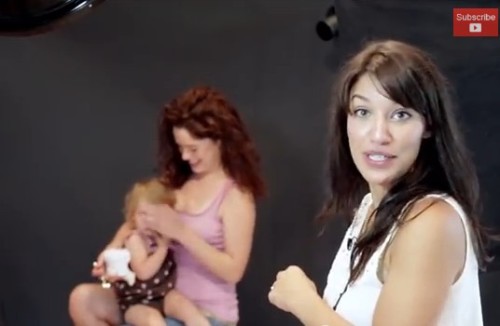
The secret to a wonderful black background with moody lighting

Mastering the black background

• Mastering the black background •
With very little practice you can get a perfect black background and moody lighting.

The eye is captured by solid black.

It provides a really focussed experience for the viewer. Low key and solid black backgrounds provide a wonderful insight on detail and features. If you get this right it provides an excellent insight for portraits and helps many other aspects of your photography. This is a technique I use for product photos, still life, landscapes and flower photography.

Simplicity itself

The technique involves using a bright light (off camera flash) to overpower the ambient light. The steps are simple…

  • Set your camera to its lowest ISO setting (around ISO 100) – the sensor is least sensitive to light.
  • Set your aperture to a high f number (small aperture = low light), say f11, or higher so that the amount of light your camera lets in is very small.
  • Take a test shot to ensure your screen is black – you want nothing to show.
  • Shoot with a diffused off-camera flash at full power using a narrow beam.

This simple technique is relying on extreme underexposure. Basically you are underexposing the whole scene to blackness. But then you are introducing a very narrow beam of brightness that overcomes a limited area of the underexposed shot. This leaves your highlighted spot on the subject in a moody light with the rest in black.

Photography Technique: The Invisible Black Background

Glyn Dewis  External link - opens new tab/page introduces the technique on video. Notice the way the umbrella is creating a focussed narrow beam of light. You can do the same thing with “barn door” lights or cards either side of a reflected flash. Enjoy the video…


By Damon Guy (author and editor)

Netkonnexion

Damon Guy (Netkonnexion)

Damon is managing editor of Photokonnexion.com with professional experience in photography, writing, image libraries, and computing. He is also an experienced, webmaster and a trained teacher. Damon runs regular training for digital photographers who are just starting out.
See also: Editors ‘Bio’
By Damon Guy :: Profile on Google+

UK Photographers image ownership rights threatened by new legislation

Copyright legislation may allow legalised theft of your images

Copyright legislation may allow legalised theft of your images


UK Government lets down photographers.

In an unprecedented move a recent piece of UK legislation threatens photographers’ ownership of their own image. The Act potentially legalises online theft of images from amateur and professional alike. The legislation, which gained Royal Assent on the 25th of April 2013, will enable “orphan works” to be claimed on the basis of a copyright search. The person claiming the image will be able to re-licence it and claim full compensation for its use or resale if the copyright owner is not found.

Enterprise and Regulatory Reform Act

The new Act, which comes into force early 2014, is a “framework” Act addressing various legislative issues. The copyright section of the Act provides the power for the Government to introduce licensing of orphan works. The Act leaves detail to be inserted later through secondary legislation. Photographers are angered that this small section of the Act has allowed this rights-changing Act to be sneaked in under the radar.

The new licensing powers will be an important re-mapping of UK copyright law. The existing emphasis on assumed copyright ownership will be shifted toward the users of copyrighted works. This represents a change of copyright ownership from a “property right” under author control to a new condition where copyright becomes a licensing/sales tool with the owner having less control over end use.

The detail of this shift in emphasis is yet to be determined. The secondary legislation will define a “diligent search” which will be needed to find the originator/copyright owner. Also to be clarified is how orphan works will be re-registered to new owners; to what extent images will be under the control of new copyright owners and how the transfer of copyright might occur.

One concern is how the process of monitoring, transferring and re-licensing orphaned images would be administered and the sort of organisation to do the work. This also raises other spectres…

  • Will works need to be registered to avoid them becoming orphaned?
  • What sort of costs are going to be involved?
  • Will artists and photographers working alone be able to register or bear the cost?
  • To what extent will amateurs be protected?

There are many more questions that need answers too.

Photographers concerns…

Last year a backlash occurred against the photography social networking site Instagram. The site implemented terms and conditions potentially passing usage rights to Instagram. In the end Instagram backed down in the light of public and user anger. Many people have seen a similar rights grabbing move in this new UK Act.

The cost of litigation against copyright abusers is prohibitive. Small photography businesses and amateurs do not have resources to fight expensive court battles. So corporations rip people off and smaller organisations hide in the tide of online images.

Photographers are worried that tide will make this legislation a free-for-all thieves charter. The concern is that anyone could claim “diligence” when searching for a copyright holder by simply doing a Google search. No immediately obvious copyright owner being found would enable them to apply for a licence to take over the copyright.

This legislation seems likely to create a new market for third party organisations to move in and manipulate the ownership of creative works. That represents a money-making bonanza for big business interests in the creative industries. It will also be a total disaster for the little guy trying to protect their life’s work and income. Amateur interests in particular are likely to be badly hit. Great images will be ripped off because amateurs will not be in a position of knowledge or resources to protect themselves.

The social media area is a particular concern. There are very real fears that the volume of images online are so huge that carrying out effective copyright searches in social media websites will not identify most image creators. This will make copyright takeovers the norm, rather than the exception, a position reinforced by weak protection for image creators.

What every UK photographer can do

This new Act is the start of a long road where the nature of copyright in the UK could change for the worse. At the moment the new landscape is shrouded in fog. However, the fact that this Act has been implemented in this way, under the radar, does not suggest a great outcome.

On the HM Government website a petition has been posted that tackles the issue. Help us raise awareness by signing the petition and telling your friends about it too. The more photographers who understand the issues the more likely we will be to ensure we have a voice in future secondary legislation on this issue. Visit this UK Government petition at:

Stop Legalised Theft of Copyrighted Works  External link - opens new tab/page

Please sign the petition and keep your eyes open for more information in the coming months.


By Damon Guy (author and editor)

Netkonnexion

Damon Guy (Netkonnexion)

Damon is managing editor of Photokonnexion.com with professional experience in photography, writing, image libraries, and computing. He is also an experienced, webmaster and a trained teacher. Damon runs regular training for digital photographers who are just starting out.
See also: Editors ‘Bio’
By Damon Guy :: Profile on Google+

find out more...Photokonnexion tips by email
If you enjoyed this article please sign up for our
daily email service.
                                                 Find out more